
Marla


desk 1So, this was it. She moved in, finally. All her boxes lay strewn across the wooden floor, toffee squares on polished, gleaming caramel where the sun hit it with bright syrupy rays. The walls were sugar white, but that could be fixed, and there was so much space! Marla turned full circle and smiled. They’d set up the bed under the third window, a broad thing, full of cushions and covers, and a bedside table she’d gotten from Rachel.

Rachel bought old furniture and painted little stories on the wood. There were trees and unicorns, lions and zebras, suns and geometry, and all this in strong, vivid colours. Every piece was unique and beautiful, and the moment Marla had enough money, she bought a little tea-table she now used for her books, lamp and old-fashioned clock that could wake the dead. Strange how, never mind the boxes, the room still looked empty. It really wasn’t a room, it was a space, a large, empty, white space. It was the kind of space found in museums or churches, smaller of course and not half as cold. It felt sacred in its emptiness, like the first day of creation before all the chaos set in.

Longer than wide, the space had two bay windows looking over this side of the city. The sills were broad and would be perfect for potted plants and candles and stray books she was bound to leave there. Books. Marla had many books. Very many, so many, her new housemate Sunny had guffawed – really, it was that sound, a sudden intake of breath, that fricative of fast-pressed air, that loose-jaw sound of awe, guffaw. Anyway, it was best if she started with that. She could save her sofa from the debris of her last life later on. Marla exhaled, held up her hair with a clip and set to work. She had two large bookshelves that proved to be just enough for all the literature she had stored in the boxes. Looking at the line of backs, Marla could see the progression of interest and education, the beginnings of literary adventure to the deep depths of her post-graduate years. She had come a long way from Charlotte’s Web and now, finally, felt that she was in her place. She could look at Discipline and Punish and know exactly what not to look for. Answers, for one thing.

*

It was late afternoon when Marla finished setting up house. Her space looked more colourful now, the plants were where they should be, the pictures placed, the posters hung, the bathroom beset with her belongings. She had rearranged her large atlases and art volumes to her coffee table covered with a square glass plate, her trusted old-school stereo was set, her guitar unharmed, her desk covered with all the usual paraphernalia, though tidier now than it ever would be again. Her wardrobe was filled, the chest of cupboards she found two days ago as well, its top set with an electric kettle, a few mugs, packets of tea and a closed jar of sugar. She would have to think about what to do with the milk. She also had wineglasses and two bottles of red, though with the pub downstairs, who knew how often she would need them.

drink 1

She was surprised how quiet it was, considering there was an actual Irish pub not far from her feet. It was all wooden walls and faded pictures, mysterious corners, two pool tables, dart-boards and an enormous TV over the counter, a huge flat-screen for the football and rugby, as was happening just now. The whole place was crowded, spilled pints and lager decorating the floor, the two waitresses clearing the glasses while Mr. Tellis stood behind the counter making sure nothing went wrong. She should call him Caden though, he was hardly a year older than herself, and both of them were approaching thirty. Marla still didn’t know how he was connected to Sunny, her third housemate. They’d been living together for some time now and yet they were neither a couple nor brother and sister, though they were very close. They teased and argued and Sunny seemed to take Caden’s word for fact. Marla was certain that if Caden Tellis would have so much as frowned when they were introduced, she wouldn’t be where she was now.

*

Marla didn’t believe in chance encounters, but to her friends she seemed to have had an enormous stroke of luck when, just a few days ago, she stopped at the notice board on the way to O’Connor’s bathrooms. It was a week night and Marla and her friends had decided to be supportive and play fan-club to Rena’s brother’s band. So they sat in the middle of an Irish pub Marla would have otherwise never entered, drinking Guinness and lager, and listening to Operation 8, who were pretty good with their guitars. Half way through a song Marla had a pressing urge to use the ladies’. She didn’t want to get stuck in line when the band had a break, so she left the table and manoeuvred her way past enthusiastic fans and mildly impressed onlookers.

The bathrooms were tidy, a little old-fashioned maybe, but much cleaner than some others she’d seen. Marla always said you knew a place by its lavatories. No matter how chic the exterior, all the secrets came out in the loo. On her way back from the WC she saw the notice board, filled with advertisements and flyers in a conglomeration of colours and fonts. She was looking for an apartment after all, so why not check. There were many offers, some ridiculous, others intriguing, and a couple worth serious thought. She was reading one of the flyers when Sunny came sauntering down the passageway, holding a tray in one hand, her black apron slung as low as her jeans, showing off her flat, navel-pierced middle.

‘Lookin’ for a place?’ was the first thing she said, which was odd, but Sunny had proved to be such an open, chatty young thing, that Marla decided to smile and answer yes, she was. ‘Upped the rent, huh?’ Sunny hedged but Marla shook her head. She’d just moved to town, she said, and needed a place to stay. ‘D’you work here?’ was the next question and Marla affirmed she had just gotten a job at one of the institutes on the hill. Marla felt she should make it clear that she was not, in fact, desperate. Sunny pouted prettily, looking impressed. Then she asked how much she’d be willing to pay for a place. It was a bit forthright, yes, but Marla gave her an approximate all the same. Sunny’s answer to that was, ‘Sounds good to me,’ adding, ‘Good luck, then,’ before walking on. Marla was puzzled but didn’t think much about it until it was her turn to buy the next round. The band was playing something less confused and Marla didn’t have to shout to catch the bartender’s attention.

The bartender. Owner actually, Rena’s brother was in awe of him due to that fact, but still. Well, what to say? He was the kind of man who got female attention whether he wanted it or not. Jet-black hair, ruffled yes, but very fitting, hazel eyes that made you look again, even if you didn’t want to, and a very catching smile. He simply looked good, there was no way around it, though Marla felt it was a pity life should so resemble a cliché. Even so, bartender or no, it couldn’t be helped: the man looked good. He kept on combing his hand through his hair to keep back the large sable curls – sable? Really? Mills & Boon should have been out of her system by now, but his hair really was very black. His shirt was rather faded too, and his jeans were well-worn, but it all fitted the pub and his laid-back style. And anyway, you couldn’t look all nice and tidy when spending half the night behind a counter with calls for pints, whiskey, shots and lager, repeatedly dipping used glasses into vats of soap-water and clear, wiping them only to use them again. And all this with that relaxed, reserved air that pressed all female flirt-buttons, especially when he was so focused on wiping the glasses. He looked as if he really couldn’t care less about what was happening beyond the counter and that was to all female eyes equal to an invitation to be talked to, flirted at, and in every case given their fullest attention.

cocktail2

Marla waited while one of the many girls smiled and batted her eyes, her pert bust pressed conveniently against her arms folded neatly on the counter, showing off an ideal cleavage. She was pretty and if the bartender noticed, he never showed it, gave her two pints with a nod and half a smile, looking neither disappointed nor irritated when Sunny turned up to take the money. He just turned back to wiping stray glasses still wet from the last dishwasher round. Marla gave a sign then, but before he came to her side of the counter, Sunny held him back with an affectionate hand and whispered something. His reaction was surprise and a scrutinizing look in Marla’s direction, followed by a nod and a relaxed walk over to where she was. He said nothing more than, ‘Yeah?’ with hardly a frown over disinterested eyes. Marla ignored everything she was seeing and ordered the Guinness the girls wanted. Standing at the taps, both he and Sunny filled the glasses, Sunny still talking confidentially, repeatedly looking at Marla, while the bartender nodded every now and then, watching the black fill the glasses. It was Sunny who brought her the drinks, but before Marla paid she said, ‘You know, we have a place upstairs.’

‘Sorry?’
‘A place,’ Sunny smiled. ‘You were looking for one, right? We have one. If you want, Caden could show you. It’ll be a bit more than you expected, but it’s really nice. I’m sure you’ll like it.’

Perplexed, Marla looked to said Ca-something, she didn’t catch what. He was taking another order from a young, highly enthusiastic Operation 8 fan who was overflowing with smiles. She asked, ‘You live here?’ and Sunny nodded ,‘Yeah, upstairs. There’s a loft that’s empty, and it has a separate bathroom with a shower. I’m serious, you should go and see. I’m sure you’ll like it.’ ‘I can come tomorrow,’ Marla said, not wanting to intrude on an obviously busy night. ‘Why?’ Sunny frowned sweetly. ‘You’re here, Caden’s here, it’d just take a few minutes. And it’s not like it’ll take you an hour to see if you like it, right?’ Sunny smiled happily, adding Marla shouldn’t worry, she’d take the pints to her friends while she went up.

This left Marla at the counter feeling awkward. She waited until Ca… well, whatever-his-name-was had finished with his next order before approaching him. Before she could say anything though, he wiped his hands and said, ‘I’ll be right out,’ without much ado. His ease was no show then. He really couldn’t care less about what was happening beyond his personal space. It was intriguing, and maybe a little annoying, but then again why be surprised. He was probably ogled at 24/7, really she should stop staring.

The bartender whose name she really did not catch – Kalen? No. – walked around the counter and motioned her to follow him to the back. Marla did just that after a quick glance to her friends who were unanimously grinning. It was a short walk through a narrow passage to a broader hallway and then up a flight of stairs to a front door. Marla tried not to register firm shoulders, well-formed arms, and considering how he walked in his jeans the rest was rather perfect as well. His trainers were well-worn, but with how life behind bar-counters could be, that was probably a good sign. He wasn’t much into outer appearances, but was it just a ruse or did he really not care? And why exactly was she thinking about this? The man could wear what he wanted, it was none of her business.

He opened the door without a word and they walked in, she really would have to find out his name. Kay-something, she was sure of that. He motioned to Marla’s immediate left, there was another flight of stairs. Marla proceeded. After eight stairs there was a corner, another four led to a small landing with a closed door. Stopping Marla heard, ‘It’s open,’ and pushed the door open. She didn’t find the light switch right away. The sensation was immediate, a sudden touch, not light, not gentle, an entanglement of fingers. His hands were warm and damp from the water. Marla walked further in, crossing her arms, and the lights were on. She fell in love with the room. There were skylights like stars in the ceiling, shedding warm, welcoming light onto a polished-wood floor. The slanted roof was spanned with thick old-wood beams and there were three windows, black now that it was night outside. Marla looked around and could immediately see herself in the open space. She smiled, pleased when she opened the door to the small bathroom. The tiles were tiny and of a fresh, minty blue until the rough stone started above shoulder level, lending the bathroom something unique without being too much. The walk-in shower had a glass door and the rest of the furnishings were smooth, white porcelain. The entire loft had an even balance between old and new and was in itself an invitation to come and stay. Walking to the centre of the room, Marla saw – really, what was his name? – lean against the door-frame, arms crossed, waiting. For a moment Marla couldn’t help wonder. He had to know how that looked. It was a bit too right, somehow.

‘It’s perfect,’ Marla smiled.
‘It’s not much of a view.’

Marla stepped to one of the windows and looked out. So far she could identify rooftops, chimneys, street lights and a lot of sky.

‘How much sun is there?’
‘This side is south, south west’

All Marla heard was sun and sunsets.

‘You work on the hill?’ she heard next.
‘Yes. I’m part of a research programme, but the pay’s steady, so – ’
‘Any pets?’ he interrupted, clearly not interested in her payroll.
‘No. Ahm – you?’
‘A cat. It’s somewhere, I don’t know where. You ok with that?’
‘Yes, I love cats,’ Marla smiled.

He just nodded as if she’d ticked the right box.

‘Sunny told you the expenses?’
‘She said it might be a bit more than I intended,’ Marla answered.

He stepped further into the room, hands at his hips, looking around as if checking if everything was in its right place. Really. Where was a camera when she needed one? Then he explained the rent and Marla felt it was rather affordable considering the newness and the space. She said, ‘I’ll take it then. I mean, if that’s all right -’ His answer was a simple, ‘Ok.’ Marla waited for more, but that was it. He walked to the door, stopped as if remembering something and asked when she planned to move in.

‘As soon as possible. If that’s ok.’
‘Yeah, that’s fine.’

And with that he walked down the stairs, leaving Marla in empty space. She clearly was no more to him than a possible lodger. And that was just right and well. Marla followed him out of the room, really what was his name? He was waiting in the hallway, and seemed eager to get back to the pub again.

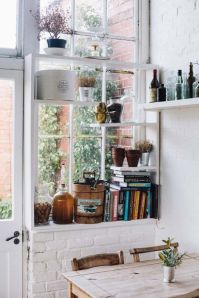
‘The kitchen’s down here, and this is the living room,’ he said, switching on the lights to the respective rooms. Marla walked in and saw an open comfortable-looking living space. window 1There was a fireplace and ample entertainment equipment, women’s magazine’s littering the coffee table. There was a room adjoining, larger than Marla expected, with a desk, computer and shelves that made it look like an office. Marla liked what she saw, there was nothing over-done or overly tidy about it. It was the kind of living room where people actually lived, which said a lot about its inhabitants. The kitchen was a surprise though. It was fairly large, dominated by a round, scrubbed-wood table with six chairs, the type of table where a family could meet and eat and talk about the day. The counter spanned the entirety of one wall, ending in a voluptuous fridge. A broad sideboard ruled the opposite wall, two sashed windows inhabited the connecting side. Marla had to smile at the lamp, a glass-drop chandelier she couldn’t help ask about. ‘It came with the house,’ was all he said, standing in the doorway again, while Marla looked around. Really, that shirt hid nothing at all. ‘The main bathroom’s just down here,’ he said, turning back into the hallway, and ‘that one’s Sunny’s and that’s mine.’
So they had separate rooms. Puzzling, but every couple had their oddities. Aware it was maybe a little too nosey to look further, Marla just nodded after peeking into the spacious, white-tiled bathroom with the blue wallpaper. What followed was an awkward moment, two strangers standing in a hallway, Marla feeling a little overdressed standing across Whatever-his-name-was really, if she didn’t find out soon, it would get embarrassing. He looked comfortable and Marla felt oddly stiff. She hadn’t really known where they were going, Theresa liked making a mystery out of everything, and so Marla wore something that would fit anywhere, though she never expected an Irish pub. She would have preferred jeans to this, but there it was, she was in a skirt and heels, feeling a little fidgety. She hadn’t forgotten her friends’ grins.

‘Is there anything else you might want to know?’ she finally asked.
‘What I’d want to know?’ he frowned.
‘About me. What I work, where I’ve been. Usually people like to know who they’ll have in their house,’ Marla smiled, trying to sound amusing.

There was another awkward silence. He looked as if Marla had said something genuinely strange. Then he said, ‘I should get back,’ turned, opened the front door and walked out. Ok. Marla didn’t know what else to do than follow him out. She told herself he wasn’t being capricious, he simply couldn’t care less. He was probably used to being universally stared at, and Marla hadn’t been all too careful had she? It was probably a small miracle he agreed to have her as a tenant. They reached the lower landing by then and Marla realised they hadn’t really talked about contracts or anything else.

‘Ahm, about tomorrow –’
‘Yes,’ he said, walking on.
‘Well, the paperwork and everything, I just thought –’

He stopped abruptly and turned.

‘Four o’clock?’
‘Ahm – ok.’

He nodded curtly, opened a door she hadn’t seen and suddenly they were back in the pub. He disappeared behind the counter and Marla found she was at her friends’ table seconds later, four pairs of eyes looking right back at her.

‘And where have you been?’ Theresa asked, raising an eyebrow.

Marla curtailed the urge to say, ‘Yeah, yeah, whatever.’ Instead she sat down and said a sober, ‘Inspecting.’

‘What do you mean, inspecting?’ Rena asked. She was just as bad as Theresa.
‘They have a room here,’ Marla said evenly. ‘It’s a whole loft with its own bathroom. We’ll share the kitchen.’
‘What? You mean – you’ll be living with that?’ Val grinned, pointing over her shoulder. Val always did that.
‘Is that why you left?’ Beth asked right after. She actually looked envious.
‘Yeah, he lives with the blonde waitress,’ Marla explained.

All four looked heartily disappointed. Beth maybe a little less so.

‘As it looks like they don’t mind having me,’ Marla continued. ‘I just saw the place, it’s really nice.’
‘And when can you move in?’ Theresa asked, sipping her drink like that.
‘We’ll meet again tomorrow for all the formalities.’

All four passed knowing looks between each other.

‘What?’ Marla asked.
‘He’s, well, y’know…’ Val grinned again.
‘You know what.’
‘Kind o’ hot?’ Rena grinned.
‘Sizzling.’ Val, of course.
‘Tssssssssss,’ Rena added, pressing her finger on her skin, making the others grin even more.
‘Pity you don’t share the same bathroom,’ Theresa grinned and they chuckled all over again.

Marla rolled her eyes and drank her Guinness. Yes, he was good-looking, she did have eyes in her head, but there was Sunny. She had that flawless blonde beauty that even Rena couldn’t compete with, though Rena added to her own with her really relaxed style. Sunny and She-really-should-find-out-his-name lived together and considering their familiarity, they knew each other long and well, which made this whole conversation rather pointless.

The band started playing again, making any type of conversation impossible, saving Marla from more teasing, though they always started again the moment the band took another break. Marla let it pass, returning with Theresa to Theresa’s flat without commenting on her suggestions of all possible possibilities, all the things that could be done, ‘Seriously Marla, admit it. Come on! Come ooooon! Admit it! Admit it!’ Theresa always got very wink-wink nudge-nudge when she was drunk. She wouldn’t stop through their whole cab-drive back to her place, until Marla finally gave up after they paid and got out. She sighed,

‘Admit what?’
‘You know what! Marla! Admit it!’

‘No I do not know what, Theresa,’ she said, tugging Theresa into the right direction. If Theresa was drunk enough she started trying to sleep on the sidewalk, complaining in tears that Marla was such a bitch for not letting her get some fucking rest for five fucking minutes.

‘Then I’ll tell you,’ Theresa insisted. ‘You wanna hear?’
‘Actually, I don’t.’
‘But you’ve gotta. Wait for it – here it comes.’
‘Ok.’
‘That man. Marla. That man’s fuckin’ hot. You hear me? You hear me? He’s! mother! fucking! hot!’

Theresa actually shouted that into the street, and the neighbourhood she lived in did not know much about rap-songs. They shouldn’t have done those Tequila shots, but Theresa was giggling anyway, which meant Marla could coax her into the building, the elevator and all the way to her flat. Thankfully Theresa was busy complaining about how drunk she was and how awful she felt and how she would kill Rena for ordering the Tequila shots, which ended with Marla helping Theresa undress and get into bed. Not that that stopped Theresa. Next morning she started all over again. She still couldn’t shut up about ‘that eye-candy that you’ve got downstairs.’

coffee 10Anyway. Now, two days later, Marla was in her new living space, and standing as she was, surrounded by her things, Marla sighed and smiled. She felt at peace here. After the past few years that was a great relief. They’d all managed to end up in the same city, Theresa and Rena naturally, Val via detours and Beth by design, and now Marla had returned, last of the five, and they could continue where they had left off four years ago. Marla started her electric kettle and prepared her tea, looking out of one of her windows to the rooftops. It was the kind of view where you expected Mary Poppins to come sailing through, the sky grey and damp, and everything warm and cosy inside. It would be good here, she would be able to think here, relax, really sleep, simply be, and in effect that was all Marla really wanted.

© 2014 threegoodwords

34 Willow Drive


coffee 7

34 Willow Drive was a very tidy place, with a neat front garden and perfectly cut grass in the back. You took off your shoes before stepping into the main house, and you took your plate to the kitchen after dinner. Prayers were said before you ate, and on Sundays the whole family dressed up smartly and went to church where there were other families with Sunday clothes on.

In the beginning the other parents were very curious about Caden, and asked Mr and Mrs Corrigan questions, giving Caden pitying looks after those conversations. The children were more forward, asking him if his Dad really almost beat him to death and wanted to see his bruises. The Willow Drive children were fascinated, and Caden was thought to be tough and dangerous since he had survived such violence. Matthew and Stephanie, (who liked to be called Steff, with two fs), liked to brag and show off with him as long as Caden was a novelty. In school they introduced him as a cousin from far away who had a dark past that made everyone curious, but after a few weeks the latest computer game came out and there was Christmas to think of and Caden was like everyone else.

Matthew and Stephanie, who, after the excitement of novelty had worn off, realised that Caden was not a guest, but had actually come to stay, Matt and Steff lost their benevolence and did their best to ignore him. They enjoyed calling him Rice or Riceboy when their parents weren’t listening, simply because Caden liked rice. He’d never eaten it outside the curry shop, and they only went if Aunt Vicky remembered to. When allowed to join in their games, Caden was responsible for all the menial jobs. He was always the servant, the worker, the villain. He enjoyed being the Red Indian most. Others might have thought Matt and Steff’s behaviour mean, but Caden, who had never lived a day in peace at home since Mother left, who never knew how it was to have siblings, who had never had the opportunity of regular meals, clean clothes and a bed that didn’t turn into a trap if someone came home drunk and violent, Caden did not feel the effects of their behaviour until much later. In the beginning he was just content with having another life. He often looked to the sky and wondered if his mother had seen how bad things were and finally found a way to save him. He didn’t know. He went to church and heard about God, but what the Vicar said didn’t really interest him. Caden said the prayers at dinner and made sure to tie his tie correctly before church, (Aunt Vicky had shown him, mumbling there was nothing sillier than a man who couldn’t tie his own shirt, her cigarette hopping up and down while she talked, ashes flying everywhere) but otherwise that part of life at the Corrigan’s remained closed to him. Caden preferred thinking that his mother was on a cloud somewhere, or that the Force actually existed. To Caden at ten, that made much more sense.

 *

Mr and Mrs Corrigan were what people called ‘steady’. They treated Caden as one of their family and never favoured him to their own children, nor their children to him. They worked hard, had strict schedules and did not like being interrupted if they were busy unless it was serious. Every Wednesday, Mrs Corrigan went to her bridge evening and on Thursday nights Mr Corrigan liked to play darts with his friends. He always came home smelling of cigarettes. The Corrigans were not the kind of happy couple you saw on TV, the kind that always laughed and cuddled their kids, living in the big shiny houses. They smiled if you did something well or patted your head. Physical contact, as they called it, was rare in the Corrigans’ house, even between Mr and Mrs Corrigan. They did not hug or cuddle Matt and Steff either, and Caden, who had had too much physical contact for his first ten years, Caden was relieved that no one would be touching him constantly like Aunt Vicky liked to do.

Speaking of Aunt Vicky, she always came at least once a year to see Caden after he moved to the Corrigans’. In the beginning Caden thought it a little tedious to have her come, but in later years he came to enjoy Aunt Vicky’s chaotic visits that always lasted a whole weekend. In his teens he discovered her great talent of making people laugh. She was someone who didn’t expect anything from you except to enjoy yourself and have a good time. She smoked, she drank, she was loud and what Mrs Corrigan called ‘vulgar’, but she was also the kind of person you could ask anything, and Caden took advantage of that when it came to those questions he would never ask the Corrigans. To them, the world was made up of fixed facts of good and bad, order and chaos, enemies and friends, and for a teen like Caden who knew how twisted and out of sync things could be, their answers were always lacking.

At least Aunt Vicky heard you out, maybe asking a few questions in this direction or that. Caden never fully understood them, but at least she asked. And she tended to let him come to his own conclusions. If it was good she smiled and nodded, if she thought it could do with some improvement, she would purse her lips like Mrs Corrigan and continue whatever she was doing. Another thing Caden enjoyed about Aunt Vicky was how she irritated Matt and Steff. They never knew how to take her. She wasn’t fashionable, but she was fun. She wasn’t posh, but she was funny. And she made Caden feel normal again. Having Aunt Vicky come visit always felt like a holiday, a three-day holiday outside his usual life in 34 Willow Drive and by the time Caden passed his GCSEs her visits weren’t something he would have wanted to miss.

©2014 threegoodwords

Ellen

Itable set 1t was almost ridiculous where they met again. Ellen was shopping at the deli for a dinner she’d promised her friends. She already had everything at home and now was looking for two or three fine cheeses to round off the dinner. She heard a woman’s voice right then, the kind of self-assured voice wealthy women had, and Ellen looked up to observe this particular specimen. The woman was a tall blonde, with perfectly done hair. She was beyond forty by a few years, maybe more, but she’d kept herself wonderfully well. She was stunning even now. Her makeup was perfect, her clothes of the best quality. The jewellery flashing at her ears, around her neck and on her fingers was beautiful, and her handbag was that particular kind where you did not ask for the price. She was beautiful, rich and powerful, it came off her like expensive perfume, and Ellen saw how others glanced at her admiringly and the shop assistants behind the counter stood to attention, smiling brightly.

‘Honey, what do you say? A little Beluga or would Salmon be enough?’ The woman asked this with a confident turn of her head and Ellen at first didn’t see who she was talking to. He was tall and had the kind of dark hair you knew was expertly taken care of. He was in a suit and there was something in the way he moved that made Ellen look again. She expected the man to be older, his hair dyed but his face betraying his real age – she saw a young, strong neck that had to be at least fifteen years younger than the blonde’s, if not more. Then again, you could never tell with these people. She could have been fifty already, but she did look marvellous, her breasts round (possibly with the help of some surgery, Ellen thought a little viciously) and her figure slender and firm. Ellen was sure she went jogging daily or had a personal trainer or something like that. And what was so bad about that, really? She had the means to keep herself very well, so why not use them? And she really did look good. Was it all that surprising then that she was with someone far younger than herself? Men did it all the time, and now women were catching up too, so why not? Ellen decided it was all rather nice in fact.

There was a short discussion between the blonde and her companion, too low for Ellen to hear and she anyway had to choose, the shop assistant was asking if she could help her. Ellen picked out the cheeses she wanted, hearing how the rich woman chose Beluga after all, enough to pay a fortune for it, but then, what was a fortune to Ellen was probably just peanuts for that beautiful woman. The young assistant packed up the cheeses in perfect wraps of brown paper and string, and Ellen couldn’t help think that the rich blonde would have been able to buy a piece of everything, but Ellen wasn’t her. She had a good life too, though. It just wasn’t as richly expensive, as glitteringly affluent as the blonde’s. Then again, wasn’t it nice to see that a woman at her age had such money and power? Everything about her told Ellen that she had worked hard to get where she was now, that she owed nothing to others and all to herself. It was in a way reassuring. The possibility, at least, was there.

Ellen smiled a thank you at the shop assistant and took the parcel of cheeses. Due to the sudden crowding at the counter, Ellen had to walk the other way, past the rich blonde and whoever-it-was with her. She said ‘Excuse me’ and ‘Pardon’ and moved past the people as best as she could, avoiding the stacked wheels of Gouda, the slim glasses of black olives and the exotic olive oils. She passed close by the rich blonde and her partner, and maybe it was curiosity, but Ellen did take a closer look. It was only a glance, a glimpse of his face, just as they too turned to leave. Ellen could not say if he saw her, but she saw him as he turned. By then she was beyond the shelves and walking without thinking. Her heart was racing so fast, she could feel it in her throat. She finally stopped at a shelf full of chutneys and breathed in deeply. Maybe she had seen wrong. Yes, maybe she had seen wrong. It was a reassuring thought. Yes, she had probably seen wrong. It would be ridiculous to meet in a place like this, especially if he was with that blonde. And who would she be anyway? But she had called him Honey. Maybe she was his mother, but Ellen knew that was wrong. The blonde wasn’t that old yet. Fifteen years at best, maybe twenty if she’d kept herself really well.

Ellen shook her head. No, she must have seen wrong. It was probably a trick of the light and it was really only a glimpse. Anyone could look like anything in a second. Yes, exactly. Ellen exhaled once more and went to pay her cheeses and the baguettes, feeling a bit like a mademoiselle. She had to wait in line and couldn’t help it, she looked along the other two queues. They were there. She was in her expensive skirt and jacket combination and he was in that perfect suit. She was talking to him and he was nodding. Ellen recognized the gesture immediately. It was in the shoulders and the turn of his head. It was in the way his hair fell and the angle of his face, showing a profile she could never forget. Just as the blonde turned to pay with her card he turned and their eyes met. Ellen felt everything inside clutch sharply, snatching at her breath. It was him. It was him. It was him. And he knew it was her, she could see it. ‘Miss?’ the young man at the cashier asked. ‘Oh, I’m so sorry,’ Ellen said, flustered, blushing. She paid her cheeses and the baguettes. They walked past her just as she was done. He did not look at her. They stepped through the sliding doors and were gone. Ellen saw that her hands were not steady when she took her card. She thanked the young man at the cashier and walked out into the rest of her evening.

*

It was him, there was no denying it. She had seen. He was not a figment of her imagination as she had come to believe over the past year, ok, seven months. Six and half. Those days had been too perfect, those weeks had been too wonderful to be real. She must have read it or seen it somewhere. It could not have happened. It could not have happened if she woke up alone that Monday and it was as if nothing had ever happened. Ellen had come to believe that, since it made it easier. She could think about it without wanting to cry if she believed it was a dream, a hallucination, a figment of her imagination, a vision in a dream. Where did she read that? Probably a blurb or magazine somewhere. Anyway, that was how she could bear it, by believing that it really never happened, it actually never took place. Now, that was impossible. It was him. She would have recognized that face anywhere.

Ellen arrived home quicker than she expected. She climbed the stairs to her front door and dreaded opening it, but she was in for a surprise. Her friend Tara was waiting with bags of shopping, grinning, ‘I got bored waiting and decided you need some help.’ Ellen smiled gratefully, and pushed back the sudden tears. She would not cry, definitely not now. No, she would not. And anyway, she had seen wrong. If she wanted to enjoy the evening, if she wanted to keep her smile, if she simply wanted to live in peace, she had to believe that. It wasn’t him. It was someone cruelly like him, but it wasn’t him. There was no one like him. He did not exist. And with that, Ellen opened the door to her apartment, stepped back into her life and started preparing the dinner, laughing with Tara who had new outrageous stories to tell, she really was a great friend, she somehow always knew when to turn up in time and make Ellen smile again.

*

A week later, Ellen came home from work feeling exhausted. The whole week had been draining. She had managed her dinner quite well, what with Tara making her laugh the whole time, and once Anne, Leon and the others joined, everything was great again anyway. But even after they left the memory was there, waiting like a bear-trap under dried leaves, snapping closed the moment Ellen walked into her bedroom. The tears were back, but she refused. She would not. No. She would not cry. She absolutely would not. She refused to. It would not happen. No tear would pearl and slide, she would not reach for any Kleenex, she would simply brush her teeth, change for bed and sleep. And Ellen managed very well until she was in bed, and turned on the TV and found a rom-com on one of the channels, one of those sticky-sweet movies with that young woman who had that face like a sweet young puppy and just got kicked like one by the bastard friend she had, shouting gleefully ‘He’s just not that into you!’ or something like that, really relishing it. Ellen saw the tears slide down the pretty face on-screen and clenched her teeth. She would not. She would not. But she did. Awfully. She cleaned out her whole box of Kleenex, she just couldn’t stop.

Somehow Ellen fell asleep. When she woke up she saw the massacre of Kleenex on her bed and floor. That was the beginning of the end. Saturday was… not good. It was so bad, she called Tara, but Tara was busy with her own life and never took her calls. Sunday turned up, and it got marginally better. Tara came over with coffee, cake and bottles of wine, and watched all kinds of nonsense with Ellen, one rom-com after the other, the worse the better, until they ended up watching Audrey Hepburn movies and singing drunkenly while draining their glasses and pouring out more wine. Tara really was the best friend Ellen had ever had, she always turned up with her emergency kit of sugar, caffeine and alcohol, coffee, cakes and wine, and didn’t care how long it took or what time it was, she stayed until Ellen stopped crying.

Monday showed up without asking and Ellen had a headache, a bad one, but she felt more like herself again. Tara had already gone home by the time her alarm went off. She had taped a post-it to Ellen’s forehead, Tara liked to do things like that. It was hugs and kisses and Need to talk? Call me!, which made Ellen smile a real smile. Tara was the best, she really was. Ellen crawled out of bed, showered, dressed and went to work, lying that she felt a bit chill when someone asked her what was wrong. It was snowing outside so they believed her.

Even so, every day was a trial. By Thursday, Ellen was exhausted all over again. She didn’t want to think anymore. She didn’t want to remember anymore. She was starting to feel that anger she loved, that anger that she had met him, that she had been so foolish to ask, and listen and answer and actually believe it meant something, that she had been stupid enough to talk to him, to give herself away like that as if she had no brain in her head.

Ellen loved that anger, it brought her back into the life she knew, that life that was hers again. By wineFriday evening Ellen detected the beginnings of normalcy. That anger was growing and soon, very soon, she would spend her hours and days furiously living her own life, with her own thoughts, her own feelings, her own peace of mind. Maybe she would call David and agree to meet him again, her evenings and nights with him were always very nice and he really was a good man. Yes, she would do that. She would go home and ask David if he would like to come over for some pasta, Ellen was very good with pasta, everyone liked her pasta, people even asked her to make it again. Yes, she would call David and ask him if he would like some pasta and wine, she was sure he wouldn’t mind a few hours to relax and unwind.

threegoodwords©2014

milkshake


milkshakeThey talk about these things. They talk about ‘love on first sight’. Fireworks, violins in the sky, the whole nine yards. They write about it, sing songs about it, stage plays, make movies, but they never say it as it is. They never say it’s sitting in a diner, reading Yeats because you’ve got an exam coming, sitting in a diner drinking a milkshake because you like it, thank you very much, they don’t say you’re sitting in a diner reading Yeats, drinking vanilla and then the door opens and she walks in. They never say it as it is.

*

Bennie was in a good mood. No ‘good’ was not the right word. To explain Bennie’s mood, you had to explain Bennie, and explaining Bennie started with explaining her name. Bennie was in fact Albany, Albany Lord. Albany Lord, Albany from Albus, latin, white. It was ironic because Bennie was all but white. She was… now how do you call it. Nutwood. Praliné, but the caramel ones. She was dark on the white scale, but a smooth, even, ‘yummy’ colour as her Maman said, on every other. People asked if she was from the Caribbean, others talked to her in Portuguese expecting she was from Brazil. People expected a lot of things.

So here’s Albany, alba, white, and here’s Bennie Lord, black, noire, and whatever other words are out there to make Bennie cringe and blush. Yes, she can blush, thanks for asking, you just don’t see it a mile off like you do with Christine, but Christine could walk into a Poe and be Madeline, though that was a bit unfair. Bennie didn’t want Christine dead under a pile of rubble. Bennie liked Christine, because Christine understood Bennie in a curiously diachronic way. There, she finally used that word, yay!

cupcake 1So yeah, there was that. And there was Paris. There was always Paris. There was always that little lilt in Bennie’s English that yelled Vive la France! to the rest of Les Etats Unis. Bennie grew up in the Rue St. Béatrice, not far from the Patisserie Hermasse and the Boulangerie Martel. Madame Hermasse and Monsieur Martel were once married. The vows were said, wedding bells rang, the young couple moved in. Twenty years later, Madame Martel moved out and opened her own shop, selling simple homemade cakes and pastries, with her husband’s blessing of ‘You’ll never make it’. It was equal to the dépêche the Kaiser sent to Franz Joseph down south. Trenches were dug up soon after, and an endless war began. And above these post-marital hostilities, the Lords lived like rich refugees in Switzerland, watching the mayhem below. For ten years, those after the three in Munich and before the six in London, Rue St. Béatrice was Bennie’s home, world, universe. In Paris the Lords were Les Americains. In London, suddenly, they were ‘that French family in Nr. 20’.

So there was that. And then, for some reason, Bennie decided she would like to see what was on the other side of the Atlantic, if it really was the Land of the Free and the Home of the Brave. She signed up and was accepted and crossed the ocean. She landed on the soil so many other foreign feet had trod, landed in a jet plane and took up house on campus, and encountered her roommate Stacey. Stacey, or Stace’ first question was ‘Where are you from?’ and since it had become so common, her accent still slipped into alluring Gallic lisps and e’s, Bennie answered ‘Paris’ without thinking. ‘Texas?’ Stace answered and at first Bennie didn’t understand. Then she smiled and realized why her mother had – bitingly – said ‘Have fun explaining everything.’

‘No, the real Paris,’ Bennie explained.
‘With the tower?’
‘Yeah.’
‘Cool! So why’re you here?’
‘Pardon?’

And it was the French pardon, with the nasal aloofness of unexpected surprise.

‘I mean, come on, what did you leave France for?’
‘I’ve been in London these past years.’
‘So why not stay in London?’

How explain to this blue-eyed babe that she wanted to see what was beyond the horizon?

‘I’m on an exchange programme.’
‘Oh, ok. Cool. I’d like to do an exchange some day, y’know, maybe tour Europe, see the Oktober –thing, you know, just hang out. Were you there?’
‘Where?’
‘The Oktoberfest.’
‘A few years ago. We were visiting a friend.’
‘Really? Sweet! How was it?’

Loud, drunk, cheeky Italians everywhere. Traditional food in the house that was famous, cafés lining up streets like some corner in Paris, kissing Sebastian in that bar and smiling when he said he could show her the city the next day. The ancient churches, that castle that had something to do with nymphs and that restaurant with the perfect linguine. Sebastian’s flat near the river, the wide bed, the soft pillows, the coffee in the morning. Flying home with the others teasing her to the bone, knowing she had his number, certain she’d never call.

‘Nice,’ Bennie said.
‘I really want to go one day. I say, are you going to that writing thing later on? They say it’s a requisite.’

And that was the beginning of her life with Stace. Stace was sweet, Stace was fun, Stace sometimes said incredible things. Bennie liked Stace. She tried not to laugh at her in her head. Stace was adorable. Stace was Stace. And so there was that as well.

So, when Bennie walked into Louis’ diner that evening, dressed in a red-and-white outfit, fifties’ style, she was in a good mood. It was a mood that had everything in it, Albany, Paris and Stace, and yes, J.J. who kissed her lips before he opened the door, J.J. in a 50s football outfit, jacket, jeans and all, J.J. who held her hand, J.J. tall, dark and handsome, J.J. the other’s called Zen, J.J…. there was a lot to J.J. Bennie couldn’t explain. But there was J.J. that evening and Stace and the others, and they all walked into the diner together in their fifties’ outfit because Colwell’s party was always a theme party and this time it was the Fifties and they were all in petticoats and high collars, bobbie-socks and pig-tails. So they walked into Louis’ and Bennie was in a good mood, a calm mood, a mood that had everything in it, she walked in and scanned the tables and saw him and thought, ‘He’d fit right in’. She saw him and felt, he was the kind of picture you wanted to have on your screen, so when your computer fell asleep you could look and look and look again, enjoying the scenery. She saw him and thought and felt and looked back at J.J. and the others and wondered that she’d never seen him before, but you never knew with these things.

quote 1

*

She was with a whole crowd, all of them cool and laid back, all of them fit to slip into a music video and fill out the screen. They never explained how they did it, how they kept it, how they made it, how they simply stayed cool, no matter what they did. They laughed and smiled and teased, and some of them were as pale as milk. They were part of it, but still, without the core, dark and glistening, the pale flesh surrounding them would be nothing. They never explained how it was done, it just happened right in front of you and you couldn’t get up to join because that would be stupid and you’d never fit in. So you just sat and watched and saw that smile, you sat and watched and waited for her to look your way, but she never did, she was all eyes for that hunk at her side. You waited and watched, inconspicuously – now was that i-c-o or i-c-u? – you waited and watched, but nothing happened, she just kept that perfect smile and you lost all the taste for your milkshake, you wished for whisky instead, bourbon and big game hats, something that could let you lean against an oak-wood counter and look like another breed of cool. You thought of the Club back home and any thought of wood panelled smoking rooms was destroyed by the golf buggy hopping down the hills. No, you could never join them, you could never do it, you were the species of the perpetually drab and un-cool.

threegoodwords©2014

coffee at seven

rain 3food 6

 Drip-drop, drip-drop, drip-drop – and I’m already tired. Can you imagine getting tired by simply watching a coffee machine do its work? I can. And not only can. I do. I’m currently leaning my head on the counter, watching the brown-black fluid dribble its way into the pot, from north to south, up to down, drip to drop, drip-drop, drip-drop, drip- 

‘Yes dear.’

That’s Max. He thought I had said something, and so came into the kitchen, checking his cufflinks with an ever-ready, ‘Yes, dear’ on his lips.

There are times when I fear that I won’t have any thoughts anymore. But just when I think they’re gone for good – whoops, there they are again.

We have a dog. A bit of a Husky. Silver grey. I call him Wolf. He loves me, I love him, together we would make the perfect pair, me being so loud and all. At least Maxwell thinks so. Sometimes. If you’ve seen The Nanny, you’ll have a vague idea of how he looks like. He smiles less, and gets embarrassed more. Plus, I don’t have that voice – then again, I’m not half as sexy as Fran.

I’m me. Short, plump, dark-blond, brown-eyed, 38-year-old me.

Plump meaning, I’m nowhere near the Nicole Kidman league. She used to be very pretty, I don’t know what happened. I was never tall, never had that slim frame. When I was twenty I had curves, curves that filled out bras and bikinis, curves that got Maxwell T. Richardson – T. for Tennyson… his parents were, are and always will be, odd – into a rather interesting mood.pretty nook

Max has always been shy.

He was the tall, dark-haired, slightly lanky sort of man, who stood with his back to the wall at dances, nursing a cup of some unidentifiable drink with one foot flat against the wall, looking like the human twin of a black feathered flamingo.

He had a nice smile, Max. Still has, those even teeth under a straight nose, grey eyes – grey, not blue, no matter what his mother says – and dark hair. Not black though. Bit of a shame, but then again, look who’s talking.

As I said, I had curves, once. Yes, ‘had’. Now I have bends. Maybe it’s because I haven’t worn a skirt in a decade. But, how can you wear a skirt, when day-in, day-out, you are elbow deep in dirt and clay – making pots, filling pots, arranging pots, selling pots, buying pots – pots, pots, pots… It goes so far that my nieces and nephews call me Mrs. Pots.

Did I mention that we don’t have children?

We did, once. For ten days. Then she died. Isabelle.

I think, until today, Maxwell hasn’t forgiven the gods for that.

That was fifteen years ago… She would be a teenager now, harassing us with basketball and boyfriends. Maxwell played basketball for some reason, centuries ago, and I was certain she would have gotten my figure-eight frame.

Drip-drop. Drip-drop. Drip-drop. Drip-

‘I say, Rosemary-.’

I hate that name. I hate it. I hate it. I hate it. And did I mention that I hate it? Why couldn’t Mother have named me June, or Diane, or Christine? No, it had to be Rosemary.

When Maxwell is irritated, he calls me Rose, which is, I know, rather ironic, but then, that flower does have thorns. Otherwise he calls me Rosemary, as if I were a herb in a glass, a picture on a wall, a cup of tea to toss in just before he goes off to work.

We live in London, fifteen minutes to the City.

Maxwell’s a banker. I’m his crazy artist wife.ceramics 2

I think he’s having an affair.

‘Yes, love?’ I answer, still with my right cheek on the kitchen counter, watching the coffee drip into its glass pot.

Drip-drop. Pit-pot. Tip-top. I-am. Mrs. Pots.

Miss Pots would fit better.

What would it be to be a Miss again?

But now, at 38?

With the faded memory of Isabelle, my love, my life, my baby?

When she was buried in her little chestnut coffin, I felt the priest had laid my love to rest as well.

We have separate beds, Maxwell and I. They are fitted together, slap up next to each other, but it is there, the great divide, and no one crosses it, not even an inch, not even once, not ever, no.

Drip-drop. Pit-pot. Tip-top. I am. Miss Pots. Miss Pots. Missed spots.

There’s a smudge on the coffee machine. It looks like crumbled icing. Or simply sugar? Who knows?

‘Are you tired, Rosemary?’

I hate it. I hate it. I hate it. I hate it. Why can’t he call me something like Chantal? Why didn’t he pick out some lovely nickname, some pet cat-call, something, anything, everything but Rosemary?

‘A tad bit.’

‘You want something from the grill?’

Maxwell never says take-away. For an unexpected moment, I catch my breath.

Ravi Naveen. That’s the boy who always comes around to drop off the curry. Maxwell calls, Ravi takes it away from the Taj, and carries it on the long exodus down two stops on bus 9, two blocks and one corner, to our house, where I wait. Then the bell rings and I, or rather my hand, shakes slightly when I open the door. And then, when it swings back to me, there he stands, the two plastic bags in his hand – Maxwell likes to eat well; bother him with his metabolism – and then he says:

‘Evening Mrs. Richardson. All’s well?’

He never says, How are you? Or Phew! What a day! but always, All’s well? – with variations. And every time, honestly, every single time, I want to grab his hand, drag him to the kitchen, sit him down with a cup of tea, and tell him everything.

But as always, I just say, Thank you, yes, fine, hand him the money with somewhat of a smile, see him tap his red cap, turn, and jog down our front steps with those long, long legs.

‘Yes, why not.’

I hear Maxwell dial the phone, order the usual, laugh a little, exchange a word or two about the day, and then hang up with something of a sigh.

‘Sit down Rosemary, you’ll end up hurting your back’, he says before walking out of the kitchen, and for some reason, some unbearable urge forces me to stick out my tongue at him after he closes the door. Then I see my reflection the blackness of the coffee pot – drip-drop, drip-drop – and it makes me want to laugh and cry all at once.

Just then, for no reason at all, I realize that it’s raining.

 
ceramics 4

Pling-pling. Pling. Pling-pling. Pling-pling-pling.

06:34.

In about five minutes, the doorbell will ring.

Will he carry an umbrella?

Or will he, like those young actors on TV – I know, it is my greatest shame, but I love them, those soap operas full of teenage agony and strife – will he be drenched to his very shirt, so that when he walks you can see every muscle? Will his hair – black, black, black! – be splattered all over his head like a glistening multi-armed octopus?

Will it in fact, be him?

Or his brother, Rajan, a boy, fifteen, sixteen perhaps.

It is hard for me to see him.

When he comes by, I remember that it should be Isabelle standing in my place, waiting with shaking fingers, wishing, hoping, praying, that he had been crazy enough to forget his umbrella.

Pling-pling. Pling-pling-pling. Pling.

I’m sitting on the window-seat, facing the street, holding a cup of coffee with a magazine on my lap, watching the rain drop like soft crystal onto the pane.

Pane. Pain.

Would rain now anything of pain? What does it feel like to be smashed against a window?

‘Do you mind getting the door, Rosemary?’ I hear from down the hall.

Maxwell lives in his office. Something of a library in fact. We went shopping for it together. He said that though it was his office, it was our house, and he didn’t want me screaming or fainting every time I entered that particular room.

It is all greens and browns.

There was a count somewhere in Maxwell’s family. He knows what it means to spend the summer in the country.

‘Yes, love.’

I hadn’t heard the ring. Funny, but the rain was suddenly as loud as church bells.

I get up, slowly.

And I walk, slowly, from the living room – it is large, with many a couch and a seatee, a fireplace (Wolf is lying in front of the crackling fire, curled up into a sleeping ball of fur), and a chaise-longue.

But I, I love the window seat. Simple, neat, full of light, day in, day out, even at night, as the street-lamp shines into it in odd orange rays, half sterile, half alive, never really gone, and never actually there.

I walk into the hall, over the checkerboard tiles, to the black front door with the golden handle.

I push down. Pull open. And wait.

‘Evening, Mrs. Richardson. All’s well, I hope. Sorry, but I forgot my umbrella.’

I put down my cup onto the small table under the hallway mirror.

It isn’t a warm evening, yet he is dressed in a light blue shirt and dark-blue jeans, his hair a colony of curls, so black, so wonderfully ebony, glossy black, I feel it’s the universe shining back at me. He has both plastic bags in one hand, while his other, young and strong, wipes the water out of his face.

It is then, when all I can see are two pairs of eyes over his fingers, fingers that look as if they knew things Maxwell wouldn’t even dream about, that I make a decision.

‘Please come in. We’ll get you dried up first.’

He looks at me surprised. And then, startlingly, he flashes a smile, so white, I feel as if struck, really, by a flash of something like lightning.

‘Rosemary?’

The heat rises into my cheeks in less than a second.

The last time I blushed like this, I believe I was staring down into Maxwell’s eyes, wondering why on earth he’d destroyed it all by asking me to marry him. We had been perfectly happy as friends. But no, he had to come with love, had to infect me with the disease, and now look what it got us into.

Ravi looks… expectant, waiting, like a young tiger on the prowl. On a second thought, that’s probably not all that right, but he really does, truly, look like that right now.

‘Yes, love.’

It is like an automatic. I hear ‘Rosemary’, and my whole vocal system collaborates to produce the air waves that compound to ‘Yes, love,’ without me even having to think a thought about it.

‘Oh – hello. I thought you hadn’t heard.’

I turn and see Maxwell in the hallway, surprised to see Ravi at the door. I feel as if Mother caught me nibbling at the Christmas Cake.

‘Good God, you’re wet through! Honestly, Rose, why don’t you ask him in?’

‘I was just about to.’

I cannot get myself to turn back to those eyes, those all-seeing eyes, and I am grateful that Maxwell walks up to the door, takes the plastic bags out of Ravi’s hands and escorts him into the kitchen. He even sits him down, pours him a cup of coffee and asks me, me, me! to fetch a towel. I do.

In the bathroom, the craziest thing crosses my mind, and I find myself spraying the towel with my perfume, softly, not too much.

When I return, I hand it to Ravi without looking at him, turn to the window where through the pane – pling-ping-splat-ping – I see him wipe his face with his eyes closed. For a moment I believe he holds it longer than necessary to his face before rubbing his hair dry – with the other side – after accepting a cup of coffee from Maxwell with a nod and a smile.

Maxwell talks to him about his day and I drink everything in, wishing to find a hint in his words, something to tell me that in between his hours at the Taj and those at the University (Engineering, he says. There’s something about building that fascinates him), his parties, his laughter, his one-night-stands – oh, he has to have them; I insist that he has to have them; he has to be at least that free, for I can see him in those fleeting moments, those nebulous hours between night and dawn where everything feels forbidden – he remembered, maybe only for a moment, maybe for the brief breadth of a flashing, passing smile, he remembered me.ceramics 3

Then, rather suddenly, the telephone rings, and Maxwell rushes out of the room, apologising.

The silence is slicing, and I cannot, for all the world, turn around, but keep looking out of the window, past the plants on the window sill, through the pane out into the small stretch of garden between the house and the fence of the one opposite. It is empty, up for sale, and so far, I think, a young couple is rather interested in buying it.

But then there is movement, the scraping of wood on stone-tiles, and something bursts in my middle, like a grape pinched between two fingers.

‘Thank you Mrs. Richardson’, he says, handing me the towel in due distance, that is three steps away from me.

There is something of a bow in how he does it, but then our fingers touch, I feel the brush of his hand, his eyes meet mine and I look to the floor like back then when I was seventeen.

‘Rosemary, do we have time on Thursday?’

I look up, a little too sharply, past Ravi to Maxwell who’s at the door, looking at a notepad, half in the doorway half in the hall. Quickly, I move away from the window.

‘No. Not that I know of.’

Maxwell nods, and leaves for his office while I open the door a bit wider. Next moment, I feel a shoulder brush my own and watch Ravi walk past me into the hall. He’s just about to reach the door when I hear myself say ‘Wait – ! Take this with you.’ I hand him my umbrella, black with my initials in silver, R.R., small and only visible to the one underneath.

He takes it with a smile, but neither our hands, nor our fingers touch.

He opens the door, and slips through. He opens the umbrella on the first front step, while I stand in the door, watching when suddenly, with the umbrella wide open, he turns, slides a hand around my neck, and kisses me, hidden under the black.

It is not very long, but warm, oh, so warm, so full of life and promise, and that extra splash of red that has long been missing in my life that I feel the bright, bursting sun fall through the towers of rainy clouds in the sky.

Next moment, he’s gone.

© 2014 threegoodwords

Anna Fonte's Paper Planes

Words, images & collages tossed from a window.

Classic Jenisms

Essays, notes & interviews on why literary fiction matters to human living

von reuth

small press. great publishing.

a thousand and one books

but don't take my word for it

Kristiane Writes

Home hub & scribble space of Prose Writer & Poet Kristiane Weeks-Rogers (she/hers), author of poetry collection: 'Self-Anointment with Lemons'.

The 100 Greatest Books Challenge

A journey from one end of the bookshelf to the other