

Iris Moore, Part VII

pen 3The stationmaster’s office was a middle-sized room with a broad desk and a wide window facing the platform. There were charts and timetables on the walls and a shelf full of ledgers took up one side. The kettle was steaming on the small stove and a blue teapot stood next to an empty cup with a spoon in it, a light spray of sugar scattered about a milk jug. The huge bulk of the desk was littered with papers, letters and more ledgers, half hiding a few pens, an inkwell, and bright brass lamp.

Mr. Andrews, as the stationmaster introduced himself, pulled up a chair for Iris and asked her to please sit down. He took out a cup with a saucer from an open shelf and handed it to her with a small bow after wiping it briskly, looking oddly like a bedraggled butler. He poured out the tea and offered milk and sugar, asking Iris how her train ride was and if she liked the country so far. Iris answered accordingly, smiling politely when Mr. Andrews exclaimed, ‘Seven days! My, you must be glad to have arrived. Too bad you’re husband’s delayed.’ Yes, too bad indeed. Again the panicked thought that Christian O’Brian might have actually forgotten her tried to steal itself into Iris’ mind but she shut it out quickly. Once she let it in, all others would follow. It would not do to lose her head. It would be much better to drink tea instead. Iris took a sip and realized that the tea was actually fine.

‘I hope it’s not too strong, I’m still practicing making it,’ the stationmaster said a little anxiously, looking small behind his massive desk. Iris said it was perfect. Mr. Andrews smiled proudly and took a healthy gulp from his cup. He was about to ask another question when he suddenly turned to the window. Something must have caught his eye. He put down his cup and got up hastily, excusing himself before stepping out to the platform. Given dusk had fallen rather quickly and the stationmaster’s office was brightly lit, Iris could not see who Mr. Andrews was talking to, but she heard a male voice, younger and deeper than Mr. Andrew’s by the sound of it – her heart lept in her chest when Mr. Andrews said, ‘Of course, Mr. O’Brian. ’

Sitting as she was, holding her saucer in one hand and her cup in the other, Iris did not know what to do. Real nervousness was starting to spread. Iris carefully set down the cup and saucer and sat as straight and dignified as she could. She would simply wait until he entered. It was, after all, inevitable.

‘I just made some tea,’ she heard Mr. Andrews say, approaching. ‘I thought your wife wouldn’t mind a cup while she waited. Sad about the gates, though,’ Mr Andrews continued, ‘Callaghan should finally do something about them.’snail mail shapedotcom
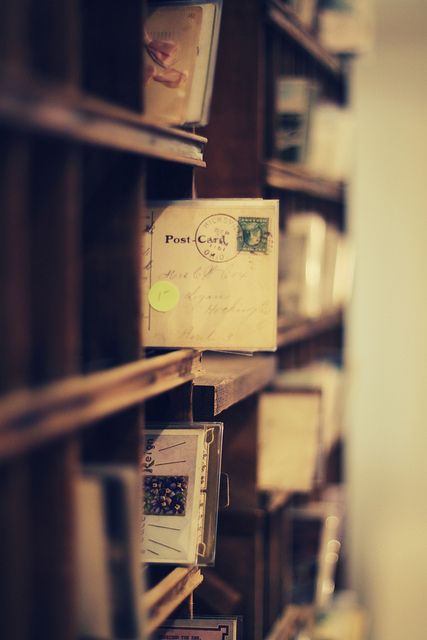
Mr. Andrew’s was almost at the door by then, the sound of heavy boots following the stationmaster’s quick tread. Iris sat as still as she could, her heart racing.

‘Mrs. O’Brian?’ Mr. Andrews called. ‘I think your husband’s here.’

Seeing that she could not risk to look hesitant, let alone reluctant with the stationmaster watching, Iris rose calmly from her seat and turned to the door, just as Christian O’Brian stepped into the light.

He was taller than she expected. Iris registered a simple jacket, dark and clean, a white shirt without a tie, a buckled belt and denim. She finally looked at his face. He did not look half as severe as his photographic twin. He was not unsightly, which was a genuine relief. She had not known his hair color for the black and white of the photograph, but now she saw that it indeed was black after he removed his hat before stepping in. His eyes were hazel under two even eyebrows, eyes that looked back at her directly, as if he had always expected to see her in the stationmaster’s office.

‘Iris,’ he nodded and Iris remembered where she was and who was watching them. ‘Hello, Christian,’ she answered and, after a heartbeat of awkwardness, she stepped forward, offering her hand. He took it without hesitation and kissed its back as if he had always done this and this was not the very first time. He held her hand just long enough for it to look like a familiar greeting and then let go, stepping aside to let her pass through the door.

‘I’ll tell Jeremy to get your trunk then, Ma’am,’ Mr. Andrews said and hurried on past Iris into the dark, calling out for said Jeremy to hurry up and bring Mrs. O’Brian’s trunk up front, ‘get to it, lad!’ Iris stood between the light of Mr. Andrew’s office and the growing dark of dusk, fully aware of Christian O’Brian standing only a step away – he turned to her right then as he put on his hat again.

‘My apologies for being late,’ he said politely. ‘There was some trouble with the river again.’
‘Another flood?’ Iris asked. He nodded,
‘I had to wait till they could close the gates. I hope you didn’t have to wait too long.’

He looked at her then, as directly as before. Iris shook her head, looking away, acutely aware of the simple ring on her finger. She was here now, married to this man, and the extent of what this meant was just beginning to dawn on her. It had all seemed far away as long as it was just letters and signatures and a long ride on the train. Now, however, what started with a bright morning reading Mr. Godfrey’s paper ended with her standing on Riverton Station’s platform next to an absolute stranger by the name of Christian O’Brian. She should probably start referring to him as Christian now, though it felt so strange to be so informal to someone she hardly knew.

f348ecfee0e5da61a68aec7ac0db1bf4.jpg Iris held her purse tightly and did her best not to look how she felt, which was a wild urge to run and hide. She could not say why, Christian O’Brian did not look menacing, but the urge was there to simply find a place where she could hide herself until she understood what was happening. Not that she didn’t know, and yet the shock was real: she was here. She was really, truly here. It was what made her jump when Christian O’Brian motioned for her to proceed towards the exit of the station once Jeremy appeared, carrying her trunk with Mr. Andrews’ help. She walked around the building to a lamp-lit street where an empty buggy was waiting, the dappled grey pawing the sand. Mr. Andrews and Jeremy made short thrift with her trunk, tying it to the back of the vehicle, Christian O’Brian – she would have to stop with the O’Brian – tipping Jeremy and shaking hands with Mr. Andrews, who asked if the gates were filling quickly again.

‘Fast enough, but not like last year,’ Christian O’Brian answered.
‘Well, that’s something then,’ Mr. Andrews nodded.

He tapped his cap to Iris with a ‘Ma’am’ and waited until Christian O’Brian was seated before he nodded to him as well. Iris, sitting in the far corner of the buggy, saw how Christian O’ – Christian flicked the reins and suddenly they were driving down into Riverton, the grey trotting easily on the sanded road, the turn of the wheels and the horse’s tread the only sounds in the silence.

*

Iris sat as still as possible, her hands folded over her purse in her lap, searching for something to break the silence, but all she could think of was that Christian O’ – no, he had kissed her hand as if it was the most natural thing, and now they sat in this buggy as if they were really a married couple, which they were, and that he was probably bringing her to his house (which she had seen with her inner eye for so many days, she wondered if the truth would shatter her dream), not to mention whether what she had done was sensible or if it was what she felt right then: complete and utter madness.

She did not know this man and yet she was bound to him by all legal actions and even before God, if the blessing of the curate counted as well. Iris watched the quiet, dark landscape pass by, disturbed every now and then by homesteads with brightly lit windows. She watched in silence, trying to tamp down a rising sensation of panic. No, it would not do to fret, let alone lose her head, she was here now and so far Christian O’Brian, no, Christian had been courteous if not a little reserved, but considering his letters that should not be a surprise. flower urgen-plombier-electricien frIt was still difficult for Iris to equal the C. O’Brian she knew from the letters with the man sitting next to her who was guiding the grey down the road, past houses and gardens and other buggies and carriages, whose passengers, thank God, were obscured by darkness. Iris kept to the shadows as best as she could, not wanting to be seen, or worse, having someone stop and ask questions. She sat as still as possible, waiting for her heartbeat to settle, though she doubted it ever would again.

© 2016 threegoodwords

Iris Moore, Part VI

Finally, after all the letters were written and all the papers signed, Iris found herself in her small room, a square box now that it was stripped of all her belongings. Two young men were carrying her heavy trunk to the hackney waiting in the street. She had informed Mr. Emerson only the day before that she would be leaving the city for good on the morrow. Mrs. Emerson, who was in the shop as well, said that nothing good would come of it, Iris was going to her destruction with her unthinking stubbornness, f348ecfee0e5da61a68aec7ac0db1bf4.jpgthe Territories were a wild and ruthless country, and she was silly to risk her reputation and good health by doing something so rash. She had rather stay and meet George Leibowitz, the young man who always came to buy mints, he had already asked about her twice. Mr. Emerson said Mrs. Emerson should calm herself, Iris had always been an independent young woman, and it was best to let her go, which did not sound like a compliment coming from him but Iris did not comment. Instead, she said her goodbyes, though she only nodded to Carter, who thankfully was busy with a customer. Iris had taken one last look then walked out of the shop, grateful she would never have to enter it again.

*

Standing in her empty room the following morning, Iris looked at the small golden band that spanned her ring finger, made on commission by Sanders, Sanders & Jones, as an initial wedding ring until Mr. O’Brian gave her his own. Mr. Sanders explained it was part of the MCA service, since one could not expect a married woman to travel such long distances alone without the sign of her family status. Mr. O’Brian’s last letter had been short but cordial, confirming the particulars of her journey that she had sent him after receiving her train ticket from Messrs. Sanders and Jones. She would be taking a sleeping car with full board and it would be a total of seven days until she reached Riverton, the coastal town where Christian O’Brian lived. Iris straightened herself, stepped out of her empty lodgings, and closed the door behind her. She had already said goodbye to Mr. Godfrey, Young Hamish, and Mrs. Rose too, who was at first shocked, then irritated, and finally almost benevolent when she saw Christian O’Brian’s picture during their last Sunday tea. ‘It seems you are as clever as your mother always said,’ Mrs. Rose had said then. She embraced Iris when saying farewell and insisted Iris write to her about her life in the Territories.

The train ride was long but pleasant. Iris spent most of her time alone during the first day, watching the landscapes, stations, and towns pass by when she wasn’t reading the book on housekeeping Mrs. Rose gave her as a farewell present. It was written by a certain Mrs. Beeton, an Englishwoman, and apparently was Mrs. Rose ‘infallible guide’ during her first years of marriage. She insisted Iris should have it, ‘all alone out there as you’ll probably be for a while’. It made Iris realize that her clever plan had become an actual reality, since Mrs. Rose obviously believed it too. On the second day of her journey, Iris was accosted by a widow by the name of Davidson during her lunch. Mrs. Davidson descended on the dining coach out of her first class domain, swathed in black and pearls, her portly frame filling out almost the entirety of her side of the red-leather bench. Iris’ table was the only free one at luncheon, and Mrs. Davidson was determined to have a partner during her meal, she was in sore need for conversation, train rides were otherwise very depressing.train-19640_1280 Mrs. Davidson was very curious as to why such a young woman was traveling alone, unless of course, silly me, she was going to meet her husband, which made Mrs. Davidson smile widely and ask innumerable questions about Mr. O’Brian.

Iris had practiced getting used to being called Mrs. O’Brian and so did not look startled when Mrs. Davidson called her so. She did her best to answer the widow’s questions without revealing too much of the truth of her situation, grateful she could show Mrs. Davidson a picture of her husband, smiling when the older woman said, ‘My, he is a handsome fellow.’ Iris no longer knew if this was true, or if she had looked at the photograph for so long with pleasant, amiable thoughts that Christian O’Brian now seemed to her quite a handsome man. She was still flattered by the widow’s comment, though she was glad when the subject turned to Mrs. Davidson’s children and grandchildren, most of all her youngest daughter who had just born her first child, a healthy boy by the name of David (to honour her father, you see). It was this daughter Mrs. Davidson was going to visit, since she was now in need of her motherly help and advice. Everyone had thought the child would come in two weeks’ time, but alas, Nature could not be stopped, but Mrs. Davidson was on her way and glad about it.

After her lunch with Iris, Mrs. Davidson would have no one else for a partner during her meals, and so Iris had a long conversation three times a day. It did not matter whether she felt no need for breakfast as she did on the fifth day: Mrs. Davidson wanted company and promptly appeared at her door with a pot of coffee, cups, spoons, milk and sugar, and a couple of hot cross buns she ordered specifically from the cook, the scallywag, insisting that Iris at least drink some coffee, she couldn’t stand young people who were too busy to eat well.

They had a pleasant though slightly crowded breakfast in Iris’ small compartment, Mrs. Davidson saying goodbye after their meal since her stop was soon to come. She also left her address, since she was curious to know how Iris experienced the Territories, not to mention how it was to see her husband after such a long time. ‘I know I’m being abominably curious, Mrs. O’Brian, but humour an old woman, if you don’t mind, I always like a lively correspondence.’ Mrs. Davidson left the train late that afternoon, and though Iris missed her amusing questions and loud laugh during dinner, she was also relieved to have the last leg of her journey to herself. writing-arts-fountain-penIris felt she needed the peace and quiet of her own compartment to prepare herself for her first meeting with Christian O’Brian, especially after a comment on Mrs. Davidson’s side put the alarming thought into Iris’ mind that the photograph she had might not be an adequate portrayal of Christian O’Brian. Iris felt foolish that that never crossed her mind but it was the simple truth: she would never have sent a false picture of herself and thus expected everyone else to do the same. For a few agonizing hours she went through all the horrendous possibilities until she resolved to patience, it was the only choice she really had. And, if Mr. O’Brian did turn out to be an ogre, she could still live as a housekeeper and return to the city and start her old life again. She would wait and see.

At five thirty-three in the afternoon of the seventh day, the train stopped at Riverton Station. Iris followed the boy who hauled her trunk onto the platform, tapping his cap when she gave him his tip, and found herself in the centre of a crowd of strangers, feeling strangely separate from all the talk and laughter and busy bustling.

*

She was still there, on Riverton Station’s platform, standing next to her trunk, watching as the platform slowly emptied without any sign of Christian O’Brian. Iris turned left and right, searching anxiously for a tall frame, if he was tall that is, or the telling hat, yet all she saw were loggers and families leaving and an empty station hall, until finally the platform was deserted. This was Riverton Station, was it not? Yes, it was. The sudden whistle of the stationmaster startled her, and the first churn of the enormous pistons filled the air. Turning, Iris watched the train slowly pull out like a giant steaming bull, while the lamps inside the train were lit one by one with dusk falling in dazzling colours of royal blue and blazing crimson and gold. It was a fiery sunset, dramatic and bright, though she could not see all of it until the train had retreated into the growing gloom like some ancient beast and finally disappeared.

Only then did Iris realize that she was standing on a platform of a town she had never seen before, wearing the ring of a man she did not know, with all her worldly possessions carefully packed in her trunk, though by the way the boys at both stations had hauled it up and down, all the order must have been destroyed by now. Still, she was here now, and there was no changing that.

Iris stroked a stray strand of hair behind her ear, and looked down herself just to be sure that she still looked the same: a simple starched blouse under her slim-cut jacket matching her deep brown skirts; her boots, though well worn, were well-tended and very comfortable, the tips peaking out from under the hem of her skirts; her hat, a simple straw piece, yes, but it fitted to her appearance which had nothing extravagant about it, nor any frills. sunset-123926_1920Mrs. Davidson had commended her on choosing simple clothes for the beginning until she got used to living ‘upstate’ as she called it. ‘It’s a rough country up here, even though Riverton’s rather civilized. It still shows you have good sense, though, Mrs. O’Brian, your husband is a lucky man. Many girls come here thinking they’re going to the Governor’s Ball, so you can imagine the disappointment when they find out it’s all woods and water and only a dance every other week.’

And it was all woods and water, Iris could see the vast expanse of forest behind the station’s barracks and storage houses, dark pines shooting up into the sky, bright leaf-trees speckled in between, and if she was not mistaken, a mountain range not very far off. Here she was in this wild country, a city girl who only knew trees from the ones she saw in parks and gardens, a young woman who couldn’t imagine how a flood really looked like, though she remembered how the streets a block away from her little room had been covered with rainwater and sewage when one of the pipes burst. It was not a nice scene and the acrid smell had lingered in the air for days.

‘Miss?’ someone called behind her right then. Iris turned and saw an elderly man wearing a blue railway suit come towards her, the stationmaster who had just whistled the train out of the station. His whiskers were smoky grey and his blue eyes looked friendly, his quick steps loud on the planks when he approached her, bowing his head.

‘Excuse me, Miss, I mean Ma’am,’ he added quickly, seeing the ring on her finger, ‘but I saw you standing there and thought you could need some help.’
‘Well, yes, in fact,’ Iris answered, not knowing what else to say.
‘Your husband forgotten you then?’ he asked in a friendly tone.
‘I…’ Iris started, and then stopped. Why lie if the truth was so obvious? And humiliating.
‘It would seem so.’
‘It can happen around these parts,’ the stationmaster said, smiling kindly. ‘Something gets in the way, and suddenly you have to run up the mountain to fix it. I’m sure he didn’t forget you, he’s just delayed. Happens all the time. You come straight from the city then?’ he added. Iris nodded.
‘Yes, I thought as much,’ the stationmaster smiled. ‘It’s good to see another one of the lads got settled enough to send for his wife. It makes things respectable to have women around, you know, and it calms things down. I say, I just put on a pot of tea, the Missus said I should stop with the coffee for a while, what with getting no sleep and all, but anyway. Would you mind some while you’re waiting? sunset-1030285_1920You can leave the trunk here, Jeremy will keep an eye on it, though I don’t think there’s anyone here who’d want to take it anyway. None of the lad’s would want women’s blouses now would they?’ he chuckled.


Iris smiled a little. There was a moment of hesitation when the stationmaster motioned her to proceed, but seeing there was no one in sight who looked remotely like Christian O’Brian, Iris walked on. She did her best not to feel frustrated, or worse, scared. What if he had forgotten and wasn’t just delayed? What if the picture didn’t in the least resemble the real Christian O’Brian? What if she had made a terrible, terrible mistake?

© 2016 threegoodwords

Iris Moore, Part V

Christian O’Brian’s answer came five days later, just as Iris found out that she had only two more weeks to stay in her room before Mrs. Norman, the proprietor’s wife, would have to ask her to leave the premises. Mrs. Norman could no longer keep Iris on such a low rent without Mr. Norman noticing. Though Mrs. Norman took care of the business of finding suitable lodgers, it was Mr. Norman who oversaw the bills and transactions, and so far he did not mind. Yet now there was a small family of new arrivals who had asked for a room only the other day, and they were paying a dollar more than Iris, which was no mean rate. writing-arts-fountain-penMrs. Norman had looked downcast and not a little embarrassed, but like a character in a play Iris once saw, Mrs. Norman shrugged her round shoulders and said, ‘My hands are tied, Miss Moore, Mr. Norman insists. Two weeks, that’s as far as I can let you stay.’

Iris was pacing the room, hugging her shawl close, grateful her window was due south and thus allowed the sun to warm her for most of the day. It was then when the tan rectangle slid out from under her door and stopped not far away from her feet. She could hear Young Hamish, who was responsible for the mail in the house, walk back down again; Hamish was a quiet boy who luckily never asked any questions. Iris, both relieved and excited by another letter from Mr. O’Brian, quickly opened the envelope and started reading without waiting to sit down.

He wrote that he was glad to know that she was in favor of children, since he could not think of a family without them. He knew that many men would prefer sons to daughters, ‘especially out here’, yet he himself had no particular favor for the children’s sex as long as they were healthy, though he had observed that it was always favorable to have one of both. He was glad to find that they already agreed on one thing (which made Iris smile). He knew it was maybe a little forward of him to be so direct about the circumstances that had begun their correspondence, ‘but I think a sense of modesty, in this case, would be misplaced.’ If his letters had not in fact repulsed her (Iris smiled again), and she thought favourably of the match, he would see to it that his lawyers brought everything to order in the following weeks. If she did not object, he suggested she send him a telegram with a simple ‘Yes’, which he would understand as her acceptance of this clumsy proposal (again, Iris smiled). Since he did not know her circumstances, and would not put her into any uncomfortable position, he had added some money that would cover any means of transport to the nearest office and the fee for the telegram. ink_pen___paperSurprised, Iris looked into the envelope again and there she saw, between an empty sheet of paper, a bright and fresh twenty dollar bill which made something clutch violently in her middle.

Iris hardly dared touch it, but she did look at it. On the one hand, she felt very uneasy that a man she did not know should send her so much money, but on the other hand, this was to be the man she was to marry, for she had already made up her mind to send ‘Yes’. Iris did not know this until she thought it, but once thought she knew it was true. She would marry Christian O’Brian though all she knew of him were a few letters and a photograph. It was, to her mind, a much better match than following the course of a Mrs. Rose, Mrs. Whitney, or Mrs. Emerson.

The rest of the letter said that Christian O’Brian hoped she did not think him too brash in his actions, and trusted in her sound judgement that she knew he meant nothing more than to clarify an otherwise awkward subject, ‘C. O’Brian’. Iris couldn’t help wonder why he had left out all possible well-wishing, though there was a certain formality to having only his name end the letter. He did write quickly, that she could see, and from his sentences it sounded as if he did not pause and ponder long to write let alone finish a letter. It fit to his directness, and Iris decided to leave it at that.

*

After finishing the letter, Iris found herself starting another until she remembered she was to send a telegram with an acceptance of his ‘clumsy proposal’, which, considering the time of day, she could do right then. Keeping her purse with the twenty dollars tightly in her grip, Iris went to the General Post Office three streetcar stops away, and sent the telegram, blushing when the young telegrapher read the address, saw her ‘Yes’, and smiled widely at her. After paying the tram fare and the fee, Iris found that she still had more than fifteen dollars left. This meant that she could not only extend her rent but also buy more petroleum for her lamp, fill her storage cupboard, and purchase some personal supplies she would be in genuine need of in a few days, though she would be careful not to buy them at Mr. Emerson’s who would inevitably ask questions.

Following through with her errands after another long day at Mr. Emerson’s that following Monday, Iris felt that she was feeling the first effects of her connection to Christian O’Brian. She could not help a murmured thanks when looking to the sky on her way home, since she knew where this particular blessing came from. To think that, if all went well, she would no longer have to stand behind Mr. Emerson’s counter and dash into the storage rooms when he or Carter virtually ordered her to… There would be no more Sunday teas with Mrs. Rose either, whom Iris had started to visit again since Mrs. Rose was after all the only friend she really had; nor would there be any more coaxing letters from Mrs. Whitney, let alone blunt suggestions from Mrs. Emerson… Iris’ relief was beginning to make itself known. snail mail shapedotcomIf all worked out well, she would soon leave her small room opposite the large Forsythe’s White advertisement and the busy downtown street. She would move away from this teaming city, she would take the train West to the wilds of Washington Territory and live a completely different life with a man by the name of Christian O’Brian. It would be very different from anything she knew, but right then Iris was grateful for anything different from what she knew. A new beginning out West at least meant there would be a genuine end to what she was in now.

Once home, with her ‘Yes’ sent and her future far less grievous than it looked like only a day before, Iris allowed herself to wonder why Christian O’Brian only ever wrote C. She wondered, too, what kind of voice he had and if his manners were well at table. She wondered if he had any family and what his friends were like, and if he had found any in Riverton. She wondered many things, and spent many of her following hours behind Mr. Emerson’s counter wondering about these things and more, which earned her a few sharp remarks, though Iris had stopped caring. Soon she would leave Emerson’s General Goods for good, and start a new life as a respectable woman, though she was careful not to reveal anything until she was absolutely certain that her ‘Yes’ had been favorably received and all had been ‘brought to order’.

*

In the space of three weeks, all was settled very efficiently by Messrs. Sanders & Jones, who asked her to a total of three interviews. Once in their spacious, imposing offices, young Mr. Sanders Jr. (son to the first Sanders of Sanders, Sanders and Jones) and grey-haired Mr. Jones explained the procedures to Iris, which was where she found out that all the fees had already been paid for by Mr. O’Brian, since it was common that the lady in question was of little means. Iris was also surprised to learn that there was a space of three months during which both partners could renounce the connection as long as the marriage had not been consummated. Sanders, Sanders & Jones would write out a letter explaining Iris had worked for three months as Mr. O’Brian’s housekeeper which would keep her name intact, and Iris’ three months of absence vouched for. However, if the marriage was consummated this could no longer be done, since a separation would mean a divorce, which was a completely different legal procedure that could not be supported by the Mountjoy Courtship Agency.

Before the marriage could be completed, though, Iris had to procure two letters of recommendation from married women about her conduct, since she too would receive two letters of recommendation from two married men about Mr. O’Brian’s conduct. Iris had worried about this, but finally asked Mrs. Rose and Mrs. Whitney if they would undertake this task, saying that she wanted to apply for a new place as a tutor and a letter of conduct from a respectable married woman was needed. Mrs. Rose and Mrs. Whitney were glad to do this, though both replied they had rather hoped Iris ‘good news’ was an engagement. Even so, they both wrote glowing letters to Sanders, Sanders & Jones, both in highest approval of Iris’ conscientiousness, tact, thrift, good manners, writing-with-penand Christian upbringing, both praising her as a healthy, pretty young woman, whose presence was a delight to all those who knew her. Iris was very flattered by these recommendations, and duly felt ashamed for having lied to Mrs. Rose and Mrs. Whitney as such. She finally decided that she would explain in full once she was the rightful Mrs. O’Brian.

Iris in turn received two letters from a Mr. Winters of the Seattle Timber Exchange, and a Mr. Lestrange of Lestrange National (San Francisco-Philadelphia), who both said Mr. O’Brian was a successful businessman who had the honourable trait of never breaking his word. He was known to be straightforward, down-to-earth young man, who directed his business responsibly and was not known to act rashly. Both Mr. Winters and Mr. Lestrange wrote that they considered themselves fortunate to count Mr. O’Brian as one of their oldest friends and associates, since they knew no man whose loyalty and dedication was equally unwavering. Messrs. Sanders, Sanders & Jones could not find a better business partner, nor a more honest one. Reading the letters, Iris had to smile at the fact that Mr. O’Brian obviously concealed from his friends what these letters of conduct were for, but even so they portrayed what she already knew: that Christian O’Brian was a man who she could very well see as her husband.

© 2016 threegoodwords


Iris Moore, Part IV

More than a week passed before the answering letter came. By the time she saw the envelope lying square on her little room’s floor, Iris was already convinced that her reply had been too short and mean for Mr. O’Brian to answer it. She had been courteous and written to both Kenneth H. Williams and Trevor Bowden, thanking them for their letters, though, regrettably, she could not continue their correspondence since her choice had already been made.

Trevor Bowden wrote again, a letter that arrived by express merely three days after she posted her replies. Mr. Bowden’s second letter was a longer, more passionate one. He proclaimed he had fallen desperately in love with Iris the moment he saw her photograph. He could hardly eat let alone sleep since knowing she existed in the world – ‘I cannot live knowing you live just two days by train away!!’ – and quite nearly begged her to reconsider her choice. It was a sweet letter, never mind its incredible exaggerations (‘My heart bleeds in rivers, Ms Moore!’), repeated vows of undying love (‘God’s truth, I will never love another!’), and multiple exclamation marks (at one point five in a row), writing-with-penall of which had caused some amusement on Iris side and put an end to whatever inclination she might have still had to consider him. Kenneth H. Williams in turn never wrote again, and in his silence Iris thought to detect a certain element of pique, though she told herself she was being silly. It was just as well that he didn’t answer, since that meant she didn’t have to read another conceited letter.

Finally, one Saturday, ten days after she sent out her three replies, Iris returned home in a pensive mood. She had just been to an early afternoon mass where she had supplicated an honest, deeply felt plea to the Lord to help her out of her situation, for now Mrs. Emerson had started talking about some young men as well, young men who apparently inquired after Iris more than once. Much more forthright than Mrs. Rose as she was, Mrs. Emerson was becoming downright pushy. If the Lord, who was almighty, if He could furnish a table before King David’s enemies, could he do the same for her, her current enemy being the painful situation of soon being penniless? With the pittance she earned at Mr. Emerson’s and her diminishing savings, she would probably soon have to follow through with either Mrs. Rose’, Mrs. Whitney’s, or Mrs. Emerson’s plans for her, which Iris thought of with genuine dread. The prospect of spending the rest of her life with one of those eligible young men always made goose bumps sprout on her skin, and never pleasantly.

Seeing the tan rectangle on the wooden floor when she returned from church had felt like an answer to her plea that Saturday, and Iris had opened the letter eagerly, smiling when she read ‘Miss Moore’ in the now familiar quick, though legible hand. It was two pages long and explained the circumstance of Mr. O’Brian’s business, which was both in timber and land, explained the expanse of his house, which sounded spacious and well-thought out, next to a large front and back garden, and even a small cluster of apple trees whose fruit he had been told were very good for making pies and compotes, which was all rather meaningless of course if she did not like apples (this had made Iris smile). pen 3He explained the surrounding countryside, which, apart from the growing town of Riverton, was comprised of estates and wildlands, his own house surrounded by neighbours and families who where much in his own trade.

As to the household, there were work-hands and a cook who took care of the bare essentials, but a man in his position could not afford to be a bachelor for long, at least not in this part of the country. Since he did not have the time for adequate courtship, and she, Miss Moore, sounded like a sensible, straightforward woman (which had somehow flattered Iris, though it did sound a little aloof), he thought their chance for happiness was as good as any others. His philosophy on marriage had always been a simple one, meaning that as long as both marriage partners respected each other, nothing could go materially wrong. He hoped he was not mistaken in thinking that this would be the case between them, if Iris consented to be his wife. As for any further knowledge to her character and person, there was one thing he would have liked to know, for she had omitted this in her form: what, by and large, were her thoughts on children? He hoped the letter found her in time, since the Post could be slow this time of the year what with the floods coming in, ‘Yours, C. O’Brian’.

Iris read the letter twice, trying to picture the house, the garden, the apple trees and countryside, looking every now and then at Mr. O’Brian’s photograph, thinking his clear and unadorned words fit very well with the unflinching gaze he directed at the camera. He was not, she felt, someone who spoke for mere speaking and very likely only ever said what he truly meant. His honesty was maybe a little blunt, but better live with an honest man than a charming, deceiving one. She was not unintelligible to the familiar ‘Yours’ either, though it had nothing of Kenneth H. Williams’ expectation of seeing Iris as his wife. Rather, she felt that Christian O’Brian was very simply asking her to marry him, not for romance, and not because he expected her to, but because he needed a sensible housekeeper and thought they had as good a chance as anyone to find felicity in such a connection. It was this frankness that pleased Iris. There would be respect on both sides, that much they both had surmised during their short exchange, and with that in place, a harmonious life was possible. All in all it sounded very promising and Iris was quite ready to consent, if Mr. O’Brian officially asked for her hand. She was surprised and a little mortified, though, to find out she had omitted the Children section in her application form and so immediately sat down to write an answer.

She thanked him for his reply and praised his description of his house, compound and neighbourhood as very vivid, making her curious to see it. Though she did not know how time-consuming timber and land were, she could imagine that it left a man in need to make his living little time for more domestic affairs, and thus understood his more modern means of finding a companion. She too had always believed that respect was essential to matrimony and so far was convinced that this would be the case between them, if the marriage would be agreed upon. She was very sorry if her omission of that particular section in her form had led to any misunderstandings, but she was very fond of children and very definitely wished some of her own. She did not have a preference regarding their sex, since she hoped for one of each, though she would be interested to know if he, Mr. O’Brian, thought otherwise. writing-arts-fountain-penFinally, Iris could not help add that she was surprised to read that the floods in that part of the country could be so devastating as to halt the entire Post, and wondered if the officials did nothing to overcome this disturbance since it must be detrimental to business transactions if torrents of water kept on carrying off the mail. ‘My warmest regards, Iris Moore.’

© 2016 threegoodwords

Iris Moore, Part III

The MCA pamphlets said that five copies would be made of Iris’ application form and sent to those men whose likes and tastes most matched her own. If these showed no success, the MCA would progress with those who had slight deviations and so on until an eligible match was found. One was to expect at least three weeks’ time for an answer from the MCA, and guaranteed both a personal letter and a copy of the bachelor’s own application form. Since not all of the men were able to reach a photographer’s in time, some could not provide a photograph immediately, but would do so upon request by the lady in question. snail mail shapedotcomFrom then on, an exchange via letter was expected, by which both applicants would acquaint themselves with each other and find if they were truly well-matched or not. Considering the MCA’s statistics, of ten men and women who applied, seven found a match, and those three who did not were soon married as well. Thus, the MCA was considered by Sanders, Sanders & Jones, as well as those who had found their life’s happiness by the agency’s aide, a thorough success. This all sounded very promising, and Iris, who did not know what to expect, resolved to waiting.

*

Iris received a total of three letters. It seemed that Sanders, Sanders & Jones really were very successful and there was a current shortage in eligible bachelors. Iris did not know if this was simply a polite way of saying only three men had thought her application and photograph appealing or whether the shortage was truly the case. Even so, there were three letters and Iris read each carefully. There was a Trevor Bowden, who sounded a little too young and eager for her liking, despite his twenty-eight years. He lived in Texas, had recently acquired a claim and had invested too much time in business to find a wife. Iris’ application and photograph had intrigued him, and he would be happy to lead her to his ranch as Mrs. Trevor Bowden. The writing was a little clumsy and the wording sometimes rather wanting in elegance, but the entirety of the letter was still pleasant and Iris was smiling when she reached ‘My very deepest regards, T. Bow.’

The second letter was from a certain Kenneth Williams (37), who sounded very respectable after his introductory ‘Dear Miss Moore’. The letter was very well-written. However, considering his use of words such as ‘auxiliary’ and ‘perspicacious’, Iris wasn’t sure whether Mr. Williams was either trying too hard to impress her or so particular as to have to show his education in a simple introductory letter. Mr. Williams spoke of his large estate in Colorado, the size of his stables, the number of his horses, and the fact that she would be one of the leading ladies of Lesterburgh’s society, (which counted at least a thousand well-respected, Christian souls), if she conceded to be his wife. He had very adequate means to guarantee her a comfortable life, and she would not be sorry to have married him. She looked a sturdy, simple woman (Iris wondered in what ways ‘simple’) who could lead a household frugally, something he found was exactly what was wanting in modern wives, who generally preferred to spend rather than save. ink_pen___paperHe would be very happy to receive her swift reply and was gladly awaiting the day he would introduce her to Lesterburgh as Mrs. Kenneth Williams. ‘With the most cordial wishes for your health and goodwill, Kenneth H. Williams.’

Iris didn’t know what to think of this letter. She had a feeling Mr. Williams rather expected she would marry him. Iris never did do well with those who expected her to do their bidding, implied or no, without so much as asking if she was agreeable to it. Maybe it was the rebellious Eduards’ streak in her, but after reading Kenneth H. Williams’ letter, she did not think she would ever be part of Lesterburgh’s society. And he, just like Trevor Bowden, had not provided her with so much as a daguerreotype, which Iris thought a little suspicious of someone who used so many cultured words. She had read enough in St. James to know that sometimes erudition only hid a far more simpler truth, which was usually pride or vanity or both. In the end, Iris could not find it in herself to like Kenneth H. Williams, even though all she knew of him was a short introductory letter.

Finally, there was the last of the three, and it was from a certain C. O’Brian whose full name by the application form was not Christopher but the more unusual Christian. He wrote ‘Miss Moore,’ without the usual ‘Dear’ and stated immediately that his sole reason for applying to Sanders, Sanders & Jones was his need for a sensible housekeeper. As he could not expect that any respectable woman would travel so far west as Washington Territory without an assurance of safety and adequate means of living, he was very willing to give his hand in return. He had found her application very convincing, and her photograph only enhanced this first estimation. However, he did not want her, Miss Moore, to be deceived into romantic ventures as many might, considering the form and nature of their initial acquaintance. He was a man of thirty-three years with his own business and own home, and considering his situation in life as a single man in a remote land, had found it best to lay his pen 3future into the hands of Messrs. Sanders & Jones. He would greatly appreciate her answer, since by her application form he had surmised that they would not be altogether mismatched, though, naturally, it was entirely to her own choosing. Without much ado, his ‘Yours sincerely, C. O’Brian’ followed and that was the end of the letter. He had, however, also enclosed a photograph, which was a pleasant surprise.

Iris held it before her and saw a man staring obstinately into the camera. He had regular, sharp-lined features, thick brows over clear eyes, a straight nose and a relaxed, well-shaped mouth. There was nothing soft about his chin as she had sometimes seen in the sons and nephews Mrs. Rose’s friends insisted she meet. In the photograph, Christian O’Brian was clean-shaven, looked healthily built, and was possibly wearing his best suit with a matching vest and tie, from the monotony of the photograph it was all a crisp black and white. He held his hat as if he had just removed it, though it did not cover the arc of his watch’s chain nor his straight, almost defiant stance. His dark hair, black on the photograph, was rather long for a gentleman, though it was not wholly unbecoming, and living in the wilds as he did such an unusual length was probably to be expected. Iris, upon seeing the photograph, thought that she could like the real twin to the image. Christian O’Brian looked neither dangerous nor violent, maybe a little grim, but you never knew on photographs. She just hoped he had good teeth, but when looking through his application form, he had crossed ‘sturdy’ in the box of Health, and left the comments section empty, where Trevor Bowden, for example, had explicated that one tooth had been knocked out during a dispute over some land.

Iris agonized for many hours over her answering letter to Mr. O’Brian. She finally wrote her thanks for his letter and that she was both grateful and, yes, a little surprised by his honesty, since it was not usual for a suitor to claim from the first a total lack of romantic feelings. She appreciated his frankness, however, since it showed to her that he was a man who was not prone to subtleties which were often the beginnings of deception. Even so, in keeping with his forthrightness, she was curious unto what conditions she would be living with him (though Iris found that sounded a little harsh, but it was already written and she could not waste too much paper) and if there was anything more he would have liked to know about her character or person. She thanked him again for his honest letter. Iris did not know what more to write, and though it looked like a short, mean little letter, she did her best to soften her words by closing it with ‘My sincerest regards, Iris Moore’.

© 2016 threegoodwords

Anna Fonte's Paper Planes

Words, images & collages tossed from a window.

Classic Jenisms

Essays, notes & interviews on why literary fiction matters to human living

von reuth

small press. great publishing.

a thousand and one books

but don't take my word for it

Kristiane Writes

Home hub & scribble space of Prose Writer & Poet Kristiane Weeks-Rogers (she/hers), author of poetry collection: 'Self-Anointment with Lemons'.

The 100 Greatest Books Challenge

A journey from one end of the bookshelf to the other