family

The wide hall was bright, thuds from the punch bags loud in the busy silence. Coach Lewis was giving stern commands to the new kids while twenty men and five women worked the bags and benches, some with their heads hidden in head gear, hands sunk in boxing mitts. Two men were on the mattresses, barefoot in track shorts and shirts, sparring. One held the shields, the second had his hands tied up in mitts, quick with the punches, doubles and triples, the first encouraging earnestly, holding against the punches, instructing him to punch higher, lower, use his left more, keep his weight steady, keep his balance right.

The door opened, there was a short commotion, heads turning, a few low whistles, some murmuring. Coach Lewis shouted, ‘Shut up, all of yer!’ and walked over. Exchanges were made. Coach Lewis nodded earnestly and walked over to the mattresses.

‘Tellis! Tellis! Oi! Tellis!’

The two men finally jumped apart. The one with the sparring shields walked over to the ropes.

‘What?’
‘Someone’s here for yer.’
‘What?’
‘Girl. She’s here for yer. Says it’s urgent.’

Coach Lewis pointed over to the door. There was a girl, no, a woman standing there in heels, coat and umbrella, looking nervous. That looked like Marla. What the fuck was she doing here? Nobody knew he was here, even Sunny had a hard time finding the place. It had to be urgent if she figured it out. And she did look nervous.

Caden climbed down and removed the shields, ignoring the, ‘Oi Tellis, what’s her name?’ and ‘Fuckin’ hell, Tellis, where’ve you been hidin’ that all this time?’ Caden walked over. The closer he came, the more nervous Marla looked. It had to be really bad then.

‘What happened?’
‘What? Oh – Hi. Yes. Sorry. Ahm. I hope I’m not disturbing – ?’
‘What happened?’

She pressed her lips together first, and Caden noticed she was wearing lipstick. She usually didn’t wear lipstick.

‘There was a call. From a hospital. Sunny couldn’t leave, the pub’s packed but –’
‘But what?’
‘They said a Vicky Lawrence is in the –’

Fuck.

‘Where?’
‘What?’
‘Where? Where is she?’
‘I have it here,’ she said, eyes wide, opening her handbag quickly.

It took her ages until she finally found the piece of paper and handed it to him. Caden checked. St George’s. Fuck.

‘Do you know her?’
‘You here with the car?’
‘Um. Yeah. Sunny gave me –’
‘Are you busy now?’
‘What?’
‘Do you need to be anywhere?’
‘I – well – no, I just came home –’
‘I’ll drop you off. That ok?’
‘Of course. Of course that’s ok.’

Caden just nodded and ran to the lockers. Fuck. Again. Why the fuck didn’t she finally stop with the fucking fags? But that was like asking an alcoholic to stop with the drink. It took ages until stopping even registered.

Smoke%2011

Forty-five minutes later, Caden was in St George’s, walking down the A&E, they never liked it when you ran. The nurse recognised him though and pointed matter-of-factly, ‘Three two seven, love. Should be stable now.’ Caden nodded and walked over. He knocked and waited, nothing happened. He opened the door and walked in. The air wasn’t as stale as he expected. He walked in quietly. She was asleep. There was a drip. No tubes though, which was a relief.

The curtains were still open, late sunlight spilling in, red and grey. Caden stood at the window first and looked out. There was just the street, black with the last rain that splashed all over the windshield, wipers clacking. He’d dropped off Marla right away, she must’ve known it was serious with the way she jumped out of the car, running in those heels to the house. How did women always manage to run in heels? Probably all the practice. He turned and drove on, it was thirty minutes with the rain. It was the nearest hospital to Vicky’s place.

She moved here once he was back, said they had to stick together. He didn’t know how bad it was then, he was just glad to have her around. She was still like she used to be back then, foul-mouthed and good for a laugh, saying fuck in every other sentence. He remembered that first ‘Fuck’ at the Corrigans, the silence, the stares. He hadn’t known it was wrong, everyone was always saying it where he used to be, nobody batted an eye. Then, at dinner, it was there, loud and clear like a pistol shot, and all four stared at him as if he was some kind of monster.

Caden heard a cough and turned. She shifted a little in the bed. She looked so weak, so grey. Her face was no longer full, the wrinkles were no longer laugh lines. He looked back out, it was raining again, the red brick of the buildings opposite a dark kind of bright, the windows white squares of light, or dark, shuttered. Someone told him that was where the outpatients went, or something like that. He’d never been in a hospital after that first time at the Corrigans. Joan dragged him to a full check-up once a year for the first five he was there, eyes, ears, brain, everything, like he might have some unknown bug after all. He didn’t mind the first time, or the second. The other three really weren’t necessary, but there was no talking to Joan once she set her mind .

‘Fuck, kid, is that you?’

Caden turned back to the bed. Her eyes were open now, tired, watery. She was still in there somewhere, he could still see her, but it was getting harder and harder these days. The worse she got, the more he felt some part of him was slipping away.

‘Hi, Vicky.’

She smiled a tired smiled and tried to sit up. Caden went over and helped her, feeling her thin arms, her whole body shaking when she coughed. It sounded much worse than last time.

‘So they did call you.’
‘Of course they did.’
‘I thought you’d be too busy getting famous to come,’ she smiled again, showing her stained teeth.

They used to be white once, he remembered that. That was years ago.

‘Never too famous for you,’ he said and she smiled, ‘Oh, fuck off,’ pleased.
‘So how are things?’ she asked, coughing.
‘Good.’
‘Still haven’t fucked you over yet from what I see,’ she grinned. ‘That posh slut still trying to get your money?’

Caden sighed. Of course.

‘Vicky, Ella’s been history for years.’
‘I’m not talkin’about Ella fuckin’ Smythe, sweetheart. Whatshername, Steff? She still after you like the rabid bitch she is? What? She’s fuckin’ nuts – ’
‘She’s getting married.’
‘Again?’

Caden nodded, Vicky started laughing that hoarse laugh that was just like home.

‘Poor fucker. Who’s it this time?’
‘Steve Richter.’
‘Ain’t that your mate?’
‘Yeah.’
‘Couldn’t get you so she dug her claws into your best mate? Classy.’

There was no point in starting that so he said, ‘How are you?’

‘Fucked, that’s what I am. What? It’s true. I’m a fuckin’ trainwreck. Look at me. All you need now are some fuckin’ cameras and you got a million-dollar show for yourself, so I’d say you start cashin’ in right now. ’

He couldn’t help it, he did smile. Vicky chuckled, pleased, but another cough stopped that.

‘Fuck.’
‘You all right?’
‘No? I’m not fuckin’ all right.’

These days, she could switch from fun to raving in seconds. Caden just waited. She coughed some more then sighed,

They want me to stop with the fags. Yeah, yeah, I know, but how’s that supposed to fuckin’ work? I live on the fuckin’ things, the only fun I have left – what?’
‘You really should stop.’
‘For what?’ she snapped bitterly. ‘It’s all I got left. You famous and Dickie off with that fuckin’ Riley slut –’ but she stopped herself, coughed a little and sighed. ‘Sorry, kid. I get carried away these days.’
‘Are you all alone up there again?’
‘I’m ok.’

Caden knew she was lying. Every time she started picking lint off something she was lying, and she was picking something invisible off the sheets. He’d asked her countless times to move in with them, showed her the loft and everything, but all she said was ‘This is way too fuckin’ fancy for me, kid, I’d just stain up the walls.’ Which was true, but at least that way he’d have been able to keep an eye on her. She refused though, but she was close, so he dropped by once a week. If he could. Sometimes he really did forget. She just slipped his mind, like she’d never been. He didn’t mean to, it just happened.

This was probably how people felt when they forgot to call up their Mum. It’s not like you hated her. It was… it was walking up those stairs into that apartment, seeing the dirty dishes piled up in the sink, the empty beer cans and vodka bottles on the table, the stubs spilling out of the ashtray, the TV on some shopping channel again and having one of her neighbours sitting on the sofa with his gut out, shouting, ‘You got any more beer left, luv?’ It was that. And hearing her cough like that. And having to blackmail her to the GP.

Last time she couldn’t pay the rent. She loaned it all to some fuckwit down the hall who never paid it back of course. So she called him up. Promised she’d do anything for this favour. So Caden went over, heard the predictable, idiotic story, and said he’d pay if she went to the GP and got a decent check-up. First she snapped he was ‘a fuckin’ tightarse’, and when he refused to budge, she shouted he was the ‘same sadistic shit’ like all the others. Then she coughed something bad, she hardly got any air. For five seconds he thought she’d suffocate right in front of him, but she finally could breathe again. Once that was over, she collapsed on a chair and cried, ‘I’m such a mess. Why d’you even put up with me?’ He waited until she was done crying and said, ‘Ready?’ She wiped her eyes and nodded and he drove her to the GP, he already got her an appointment, there was no point in asking her to do it herself.

It was that. And having to see her face that was nothing like the one on the pictures he had on the kitchen wall. She used to be so full of life. She used to be this… brightness. Ease. Laughter. By the time he got his acceptance letter, he genuinely looked forward to seeing her again. She was a real breath of fresh air, foul-mouthed, smoking like haystack, downing shots with him at The King’s Head on the high street, laughing loud.

He didn’t want to see her like this, remember her like this, thin and grey, just this side of bitter, coughing so hard he half expected her to literally spit out her lungs. He couldn’t stay away though, he had to come. She was all the family he had left.

© 2014 threegoodwords
at the window, 1

la-piscine

So maybe she was a little different, ok.
Maybe she did live an unusual life, all right.

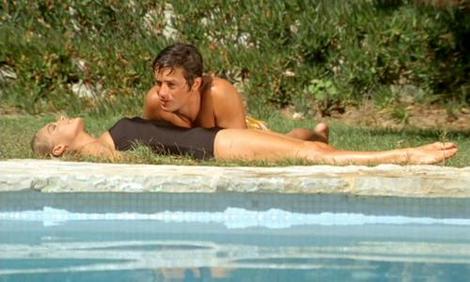
Alain Delon was beautiful. Back then.
Then he went Bardot. A pity.

So maybe she thought a bit too much.

Romy Schneider? Gorgeous.
She’d love to have a swimming pool.

Crystal blue. Shrubs and greenery seaming the stone.
Hot, hot days.
White cushions to sink into.
Drinking longdrinks, ice clinking, stumbling about.
Without all that mess in the end.

‘Intellectual’ was a silly word.
She took the time to think one thought through to the end
before starting with another.

It started in Paris, as these things start. Then there was India, then a long stint in New York. Finally, London where one could find India just a few streets away.

How many of them wished they were young again?
Young and beautiful and daring
without all those crazy mistakes they made?
How many wanted none of that, and were actually that thing that was so rare: How many were happy, content, blissfully self-aware?

*

candles 2

Alone in her room, naked except for an old bathrobe, Marla continued smoking her cigarette. She rarely smoked, but right now she felt like one. Windows open, the night black, lights speckling the emptiness. The bathrobe was a cheap piece from a corner shop in Camden, cream with black borders. A violently red and purple dragon with golden fangs and talons on the back. The black sash kept everything from falling wide open.

Behind her, La Piscine, The Swimming Pool, flickering across the screen. She carried the whole thing up there just recently, plugged in all the cables, figured out all the channels, and found a way to get that French one as well. No advertisements, just movies, short and long, documentaries, reports, news, interviews, exactly what a girl wanted.

Delon smoldered on the screen.
Schneider beamed back, cheekily.
They were beautiful. Back then. What a pity.
Age should not happen to people.
It softened something, in the muscles, in the brain.

And then you started saying very stupid things
with absolute conviction.

But he was that. Then. So was she, but she… that was sad. A real pity.
And the cute girl with the cropped hair, sun-kissed skin and the blotched bright dress, pouting. As she would, if he ran off like that. What happened to her? Was she ever seen, filmed, screened again?

Marla turned away, she knew the rest.

Standing at the open window, she drank from her cup of tea.
The chill breeze slipped icily over her skin. She didn’t move though. She didn’t readjust the belt, everything was slipping, but she was safe from curious eyes. All around were only rooftops and chimneys.

It was quiet enough to hear that low throb of the pub downstairs.

If she thought about it long enough, it was as if the music was rising up through her toes, up past her calves and thighs, all the way into her.

He had taught her not only to listen, but to feel.
How old was she, five? Seven? Somewhere there.

Sitting cross legged in front of the record player, having him hold her on his lap, telling her who the singer was, where they were playing, showing her the sleeves. She understood nothing, but she felt it, the music, rising up from the floor through her toes and soles, up her legs all the way into her, until it wrapped itself around her heart and filled the beat, until she felt it way down to what she knew was her core.

Singing to the music was a part of it after that. Humming, tapping, clapping, remembering the lyrics when it caught that cord in her soul.

That was them, then. Alicia and Ric, Ma and Pa.
The music, the laughter, the crazy friends.
Those late nights where Marla would wake up and hear the bongos and guitars downstairs, the singing and laughter. Always the laughter, real, genuine, from the heart.

And she would creep down with Jackson and Sadie, and see their mother and father dance and sing, and play their instruments with their friends, drinking straight out of wine bottles and finishing a whole bottle of whisky, sometimes even climbing onto the table top. Or when Bella, Dr. Garcia’s Andalusian wife, would dance a flamenco that was breathtaking.

Bella showed them how to make paella, her mother was from the north east, near Bilbao. She said it wasn’t right if you weren’t close to the sea. Marla still made it at family dinners.

food 5

It was a Brandon tradition to eat dinner together, all five of them, Alicia, Ric, Jackson, Sadie and herself, mother, father, and three kids. Dinners were always loud, boisterous. Arguments, laughter, more arguments. Plates, bowls and drinks, salt, pepper, chutney and masala passed around without actually breaking the conversation.

Her new housemates were quiet eaters.
If they did eat together, which was rare.
If they did eat together, then it was done quickly, as if eating was a nuisance to get over with.

Marla loved long dinners. She watched, amazed.

The hasty cooking, the impatient sitting down and getting up, the rush to rinse dishes and stack everything into the dish washer. If anything was said, then it had to do with plans for the pub, some new acquaintance Sunny had made the previous night or what was happening in her circle of friends.

Caden seemed to have no private life.
At least he never mentioned one.

He seemed only to exist to see that the pub did good business, that the supplies were well-stocked, and that the bands signed up in time and had enough equipment.

The tea was still warm, almost hot, nicely smooth and sweet.
The cup warmed her hand, the cigarette glowing in the dark, red.

He wasn’t rude, nor in fact quiet.
He was simply very sparse with his words.
Attentive though. And observant.

You had to be, to keep a pub running without fights breaking out.
That bloke who thought someone had looked at his girl wrong.
Those two who thought Sunny was fair game.
Caden just needed to ask the person if he could help him on and all was settled again.

It didn’t happen often though. O’Connor’s was a place where friends came to have a pint, play a game of darts or pool. Every now and then old rivalries would break through, yes, but if Sunny couldn’t break it up, Caden would.

He really didn’t do anything.
He was just there.
It was that look.
Hard to describe really.

And then there was Sunny. They were so different in temperament and character. Marla was surprised that they managed to live in the same house for so long.

She knew bits and pieces now.

What was now the office used to be Adam O’Connor’s room, the man who took over the derelict pub many years back, at least twenty from what Marla understood. Caden’s last name was Tellis though, so he could hardly be Adam’s son. Sunny was Adam’s niece, she moved in with Adam in her early teens. There was more to that, but she couldn’t ask yet. In a few weeks, maybe.

Adam passed away a few years back, four or five, Marla couldn’t say.

They missed him, both in their own way. Sunny with comments that started with, ‘Adam used to say’, Caden by never mentioning him unless Sunny made him, and then only very little. They must have been close though. Caden rightfully owned O’Connor’s and the whole house with it.

How did that happen?
She would have to wait.
A few months maybe.

Marla drew on her cigarette, exhaled.
Her fingers were still stained from the Henna.
Diwali was just a week away.

Sunny walked into the kitchen and asked Marla about the lamps. Marla explained about the fight of good and evil, the victory of the light within. Sunny was surprised. A bit amused. She asked if she was into religion, a bit as if Marla had a limp. Marla made tea and asked Sunny if she wanted a cup. They sat down at the scrubbed-wood table, and Marla explained her years in India, seven in total, rain seasons in Mumbai, and summers in Madras with family friends.

Lighting the candles.
Standing on the veranda,
hearing the insects, seeing the night.
The ocean, wide.
Stars out in billions.
Life.

candles 3They had a long talk about what it meant to have a faith, if it made sense to have one and what Sunny believed in –  ‘I mean, I guess there’s something, but I really wouldn’t know what it is, y’know?’ – and how it had been to go to confession when she felt she had nothing to confess. It was the first serious talk they had. It left Marla with the feeling that despite her happy, chatty ways, Sunny did have a few deeper thoughts in her head.

Caden said nothing to the lamps, the candles, nor the mehndi Marla painted on Sunny’s hands. Sunny really liked them, ‘It’s like a tattoo but it isn’t? That’s totally cool!’

That afternoon was filled with stories about make-up, fashion and boys. A lot about boys. Mostly about boys actually, and what utter idiots they were. And how cute. And how stupid. And how sweet. And how thick. And how lovely. And how utterly useless, really there was no point in them anyway. But whatever-his-name was really hot, drool-worthy, awesome.

Marla smiled. Sunny was twenty after all.
Marla had mellowed to live and let live, but Sunny still made radical stands.
Twenty.
That was almost ten years ago. A decade. A whole decade.
She was thinking in decades now.
Like when she said ‘last time’ and realised it was actually three years ago.
And ‘yesterday’ had turned into last year.

© 2014 threegoodwords

Ellen

Itable set 1t was almost ridiculous where they met again. Ellen was shopping at the deli for a dinner she’d promised her friends. She already had everything at home and now was looking for two or three fine cheeses to round off the dinner. She heard a woman’s voice right then, the kind of self-assured voice wealthy women had, and Ellen looked up to observe this particular specimen. The woman was a tall blonde, with perfectly done hair. She was beyond forty by a few years, maybe more, but she’d kept herself wonderfully well. She was stunning even now. Her makeup was perfect, her clothes of the best quality. The jewellery flashing at her ears, around her neck and on her fingers was beautiful, and her handbag was that particular kind where you did not ask for the price. She was beautiful, rich and powerful, it came off her like expensive perfume, and Ellen saw how others glanced at her admiringly and the shop assistants behind the counter stood to attention, smiling brightly.

‘Honey, what do you say? A little Beluga or would Salmon be enough?’ The woman asked this with a confident turn of her head and Ellen at first didn’t see who she was talking to. He was tall and had the kind of dark hair you knew was expertly taken care of. He was in a suit and there was something in the way he moved that made Ellen look again. She expected the man to be older, his hair dyed but his face betraying his real age – she saw a young, strong neck that had to be at least fifteen years younger than the blonde’s, if not more. Then again, you could never tell with these people. She could have been fifty already, but she did look marvellous, her breasts round (possibly with the help of some surgery, Ellen thought a little viciously) and her figure slender and firm. Ellen was sure she went jogging daily or had a personal trainer or something like that. And what was so bad about that, really? She had the means to keep herself very well, so why not use them? And she really did look good. Was it all that surprising then that she was with someone far younger than herself? Men did it all the time, and now women were catching up too, so why not? Ellen decided it was all rather nice in fact.

There was a short discussion between the blonde and her companion, too low for Ellen to hear and she anyway had to choose, the shop assistant was asking if she could help her. Ellen picked out the cheeses she wanted, hearing how the rich woman chose Beluga after all, enough to pay a fortune for it, but then, what was a fortune to Ellen was probably just peanuts for that beautiful woman. The young assistant packed up the cheeses in perfect wraps of brown paper and string, and Ellen couldn’t help think that the rich blonde would have been able to buy a piece of everything, but Ellen wasn’t her. She had a good life too, though. It just wasn’t as richly expensive, as glitteringly affluent as the blonde’s. Then again, wasn’t it nice to see that a woman at her age had such money and power? Everything about her told Ellen that she had worked hard to get where she was now, that she owed nothing to others and all to herself. It was in a way reassuring. The possibility, at least, was there.

Ellen smiled a thank you at the shop assistant and took the parcel of cheeses. Due to the sudden crowding at the counter, Ellen had to walk the other way, past the rich blonde and whoever-it-was with her. She said ‘Excuse me’ and ‘Pardon’ and moved past the people as best as she could, avoiding the stacked wheels of Gouda, the slim glasses of black olives and the exotic olive oils. She passed close by the rich blonde and her partner, and maybe it was curiosity, but Ellen did take a closer look. It was only a glance, a glimpse of his face, just as they too turned to leave. Ellen could not say if he saw her, but she saw him as he turned. By then she was beyond the shelves and walking without thinking. Her heart was racing so fast, she could feel it in her throat. She finally stopped at a shelf full of chutneys and breathed in deeply. Maybe she had seen wrong. Yes, maybe she had seen wrong. It was a reassuring thought. Yes, she had probably seen wrong. It would be ridiculous to meet in a place like this, especially if he was with that blonde. And who would she be anyway? But she had called him Honey. Maybe she was his mother, but Ellen knew that was wrong. The blonde wasn’t that old yet. Fifteen years at best, maybe twenty if she’d kept herself really well.

Ellen shook her head. No, she must have seen wrong. It was probably a trick of the light and it was really only a glimpse. Anyone could look like anything in a second. Yes, exactly. Ellen exhaled once more and went to pay her cheeses and the baguettes, feeling a bit like a mademoiselle. She had to wait in line and couldn’t help it, she looked along the other two queues. They were there. She was in her expensive skirt and jacket combination and he was in that perfect suit. She was talking to him and he was nodding. Ellen recognized the gesture immediately. It was in the shoulders and the turn of his head. It was in the way his hair fell and the angle of his face, showing a profile she could never forget. Just as the blonde turned to pay with her card he turned and their eyes met. Ellen felt everything inside clutch sharply, snatching at her breath. It was him. It was him. It was him. And he knew it was her, she could see it. ‘Miss?’ the young man at the cashier asked. ‘Oh, I’m so sorry,’ Ellen said, flustered, blushing. She paid her cheeses and the baguettes. They walked past her just as she was done. He did not look at her. They stepped through the sliding doors and were gone. Ellen saw that her hands were not steady when she took her card. She thanked the young man at the cashier and walked out into the rest of her evening.

*

It was him, there was no denying it. She had seen. He was not a figment of her imagination as she had come to believe over the past year, ok, seven months. Six and half. Those days had been too perfect, those weeks had been too wonderful to be real. She must have read it or seen it somewhere. It could not have happened. It could not have happened if she woke up alone that Monday and it was as if nothing had ever happened. Ellen had come to believe that, since it made it easier. She could think about it without wanting to cry if she believed it was a dream, a hallucination, a figment of her imagination, a vision in a dream. Where did she read that? Probably a blurb or magazine somewhere. Anyway, that was how she could bear it, by believing that it really never happened, it actually never took place. Now, that was impossible. It was him. She would have recognized that face anywhere.

Ellen arrived home quicker than she expected. She climbed the stairs to her front door and dreaded opening it, but she was in for a surprise. Her friend Tara was waiting with bags of shopping, grinning, ‘I got bored waiting and decided you need some help.’ Ellen smiled gratefully, and pushed back the sudden tears. She would not cry, definitely not now. No, she would not. And anyway, she had seen wrong. If she wanted to enjoy the evening, if she wanted to keep her smile, if she simply wanted to live in peace, she had to believe that. It wasn’t him. It was someone cruelly like him, but it wasn’t him. There was no one like him. He did not exist. And with that, Ellen opened the door to her apartment, stepped back into her life and started preparing the dinner, laughing with Tara who had new outrageous stories to tell, she really was a great friend, she somehow always knew when to turn up in time and make Ellen smile again.

*

A week later, Ellen came home from work feeling exhausted. The whole week had been draining. She had managed her dinner quite well, what with Tara making her laugh the whole time, and once Anne, Leon and the others joined, everything was great again anyway. But even after they left the memory was there, waiting like a bear-trap under dried leaves, snapping closed the moment Ellen walked into her bedroom. The tears were back, but she refused. She would not. No. She would not cry. She absolutely would not. She refused to. It would not happen. No tear would pearl and slide, she would not reach for any Kleenex, she would simply brush her teeth, change for bed and sleep. And Ellen managed very well until she was in bed, and turned on the TV and found a rom-com on one of the channels, one of those sticky-sweet movies with that young woman who had that face like a sweet young puppy and just got kicked like one by the bastard friend she had, shouting gleefully ‘He’s just not that into you!’ or something like that, really relishing it. Ellen saw the tears slide down the pretty face on-screen and clenched her teeth. She would not. She would not. But she did. Awfully. She cleaned out her whole box of Kleenex, she just couldn’t stop.

Somehow Ellen fell asleep. When she woke up she saw the massacre of Kleenex on her bed and floor. That was the beginning of the end. Saturday was… not good. It was so bad, she called Tara, but Tara was busy with her own life and never took her calls. Sunday turned up, and it got marginally better. Tara came over with coffee, cake and bottles of wine, and watched all kinds of nonsense with Ellen, one rom-com after the other, the worse the better, until they ended up watching Audrey Hepburn movies and singing drunkenly while draining their glasses and pouring out more wine. Tara really was the best friend Ellen had ever had, she always turned up with her emergency kit of sugar, caffeine and alcohol, coffee, cakes and wine, and didn’t care how long it took or what time it was, she stayed until Ellen stopped crying.

Monday showed up without asking and Ellen had a headache, a bad one, but she felt more like herself again. Tara had already gone home by the time her alarm went off. She had taped a post-it to Ellen’s forehead, Tara liked to do things like that. It was hugs and kisses and Need to talk? Call me!, which made Ellen smile a real smile. Tara was the best, she really was. Ellen crawled out of bed, showered, dressed and went to work, lying that she felt a bit chill when someone asked her what was wrong. It was snowing outside so they believed her.

Even so, every day was a trial. By Thursday, Ellen was exhausted all over again. She didn’t want to think anymore. She didn’t want to remember anymore. She was starting to feel that anger she loved, that anger that she had met him, that she had been so foolish to ask, and listen and answer and actually believe it meant something, that she had been stupid enough to talk to him, to give herself away like that as if she had no brain in her head.

Ellen loved that anger, it brought her back into the life she knew, that life that was hers again. By wineFriday evening Ellen detected the beginnings of normalcy. That anger was growing and soon, very soon, she would spend her hours and days furiously living her own life, with her own thoughts, her own feelings, her own peace of mind. Maybe she would call David and agree to meet him again, her evenings and nights with him were always very nice and he really was a good man. Yes, she would do that. She would go home and ask David if he would like to come over for some pasta, Ellen was very good with pasta, everyone liked her pasta, people even asked her to make it again. Yes, she would call David and ask him if he would like some pasta and wine, she was sure he wouldn’t mind a few hours to relax and unwind.

threegoodwords©2014

coffee at seven

rain 3food 6

 Drip-drop, drip-drop, drip-drop – and I’m already tired. Can you imagine getting tired by simply watching a coffee machine do its work? I can. And not only can. I do. I’m currently leaning my head on the counter, watching the brown-black fluid dribble its way into the pot, from north to south, up to down, drip to drop, drip-drop, drip-drop, drip- 

‘Yes dear.’

That’s Max. He thought I had said something, and so came into the kitchen, checking his cufflinks with an ever-ready, ‘Yes, dear’ on his lips.

There are times when I fear that I won’t have any thoughts anymore. But just when I think they’re gone for good – whoops, there they are again.

We have a dog. A bit of a Husky. Silver grey. I call him Wolf. He loves me, I love him, together we would make the perfect pair, me being so loud and all. At least Maxwell thinks so. Sometimes. If you’ve seen The Nanny, you’ll have a vague idea of how he looks like. He smiles less, and gets embarrassed more. Plus, I don’t have that voice – then again, I’m not half as sexy as Fran.

I’m me. Short, plump, dark-blond, brown-eyed, 38-year-old me.

Plump meaning, I’m nowhere near the Nicole Kidman league. She used to be very pretty, I don’t know what happened. I was never tall, never had that slim frame. When I was twenty I had curves, curves that filled out bras and bikinis, curves that got Maxwell T. Richardson – T. for Tennyson… his parents were, are and always will be, odd – into a rather interesting mood.pretty nook

Max has always been shy.

He was the tall, dark-haired, slightly lanky sort of man, who stood with his back to the wall at dances, nursing a cup of some unidentifiable drink with one foot flat against the wall, looking like the human twin of a black feathered flamingo.

He had a nice smile, Max. Still has, those even teeth under a straight nose, grey eyes – grey, not blue, no matter what his mother says – and dark hair. Not black though. Bit of a shame, but then again, look who’s talking.

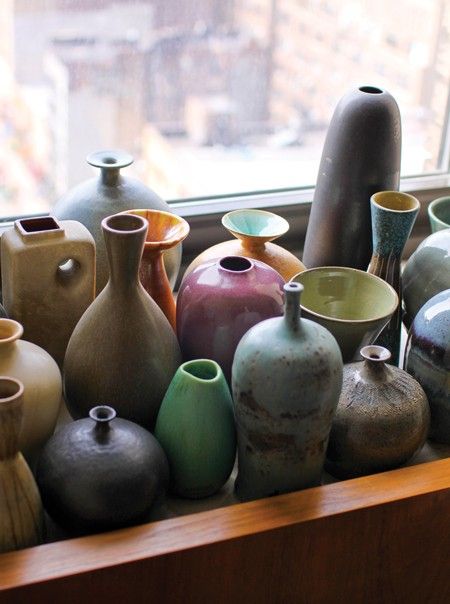
As I said, I had curves, once. Yes, ‘had’. Now I have bends. Maybe it’s because I haven’t worn a skirt in a decade. But, how can you wear a skirt, when day-in, day-out, you are elbow deep in dirt and clay – making pots, filling pots, arranging pots, selling pots, buying pots – pots, pots, pots… It goes so far that my nieces and nephews call me Mrs. Pots.

Did I mention that we don’t have children?

We did, once. For ten days. Then she died. Isabelle.

I think, until today, Maxwell hasn’t forgiven the gods for that.

That was fifteen years ago… She would be a teenager now, harassing us with basketball and boyfriends. Maxwell played basketball for some reason, centuries ago, and I was certain she would have gotten my figure-eight frame.

Drip-drop. Drip-drop. Drip-drop. Drip-

‘I say, Rosemary-.’

I hate that name. I hate it. I hate it. I hate it. And did I mention that I hate it? Why couldn’t Mother have named me June, or Diane, or Christine? No, it had to be Rosemary.

When Maxwell is irritated, he calls me Rose, which is, I know, rather ironic, but then, that flower does have thorns. Otherwise he calls me Rosemary, as if I were a herb in a glass, a picture on a wall, a cup of tea to toss in just before he goes off to work.

We live in London, fifteen minutes to the City.

Maxwell’s a banker. I’m his crazy artist wife.ceramics 2

I think he’s having an affair.

‘Yes, love?’ I answer, still with my right cheek on the kitchen counter, watching the coffee drip into its glass pot.

Drip-drop. Pit-pot. Tip-top. I-am. Mrs. Pots.

Miss Pots would fit better.

What would it be to be a Miss again?

But now, at 38?

With the faded memory of Isabelle, my love, my life, my baby?

When she was buried in her little chestnut coffin, I felt the priest had laid my love to rest as well.

We have separate beds, Maxwell and I. They are fitted together, slap up next to each other, but it is there, the great divide, and no one crosses it, not even an inch, not even once, not ever, no.

Drip-drop. Pit-pot. Tip-top. I am. Miss Pots. Miss Pots. Missed spots.

There’s a smudge on the coffee machine. It looks like crumbled icing. Or simply sugar? Who knows?

‘Are you tired, Rosemary?’

I hate it. I hate it. I hate it. I hate it. Why can’t he call me something like Chantal? Why didn’t he pick out some lovely nickname, some pet cat-call, something, anything, everything but Rosemary?

‘A tad bit.’

‘You want something from the grill?’

Maxwell never says take-away. For an unexpected moment, I catch my breath.

Ravi Naveen. That’s the boy who always comes around to drop off the curry. Maxwell calls, Ravi takes it away from the Taj, and carries it on the long exodus down two stops on bus 9, two blocks and one corner, to our house, where I wait. Then the bell rings and I, or rather my hand, shakes slightly when I open the door. And then, when it swings back to me, there he stands, the two plastic bags in his hand – Maxwell likes to eat well; bother him with his metabolism – and then he says:

‘Evening Mrs. Richardson. All’s well?’

He never says, How are you? Or Phew! What a day! but always, All’s well? – with variations. And every time, honestly, every single time, I want to grab his hand, drag him to the kitchen, sit him down with a cup of tea, and tell him everything.

But as always, I just say, Thank you, yes, fine, hand him the money with somewhat of a smile, see him tap his red cap, turn, and jog down our front steps with those long, long legs.

‘Yes, why not.’

I hear Maxwell dial the phone, order the usual, laugh a little, exchange a word or two about the day, and then hang up with something of a sigh.

‘Sit down Rosemary, you’ll end up hurting your back’, he says before walking out of the kitchen, and for some reason, some unbearable urge forces me to stick out my tongue at him after he closes the door. Then I see my reflection the blackness of the coffee pot – drip-drop, drip-drop – and it makes me want to laugh and cry all at once.

Just then, for no reason at all, I realize that it’s raining.

 
ceramics 4

Pling-pling. Pling. Pling-pling. Pling-pling-pling.

06:34.

In about five minutes, the doorbell will ring.

Will he carry an umbrella?

Or will he, like those young actors on TV – I know, it is my greatest shame, but I love them, those soap operas full of teenage agony and strife – will he be drenched to his very shirt, so that when he walks you can see every muscle? Will his hair – black, black, black! – be splattered all over his head like a glistening multi-armed octopus?

Will it in fact, be him?

Or his brother, Rajan, a boy, fifteen, sixteen perhaps.

It is hard for me to see him.

When he comes by, I remember that it should be Isabelle standing in my place, waiting with shaking fingers, wishing, hoping, praying, that he had been crazy enough to forget his umbrella.

Pling-pling. Pling-pling-pling. Pling.

I’m sitting on the window-seat, facing the street, holding a cup of coffee with a magazine on my lap, watching the rain drop like soft crystal onto the pane.

Pane. Pain.

Would rain now anything of pain? What does it feel like to be smashed against a window?

‘Do you mind getting the door, Rosemary?’ I hear from down the hall.

Maxwell lives in his office. Something of a library in fact. We went shopping for it together. He said that though it was his office, it was our house, and he didn’t want me screaming or fainting every time I entered that particular room.

It is all greens and browns.

There was a count somewhere in Maxwell’s family. He knows what it means to spend the summer in the country.

‘Yes, love.’

I hadn’t heard the ring. Funny, but the rain was suddenly as loud as church bells.

I get up, slowly.

And I walk, slowly, from the living room – it is large, with many a couch and a seatee, a fireplace (Wolf is lying in front of the crackling fire, curled up into a sleeping ball of fur), and a chaise-longue.

But I, I love the window seat. Simple, neat, full of light, day in, day out, even at night, as the street-lamp shines into it in odd orange rays, half sterile, half alive, never really gone, and never actually there.

I walk into the hall, over the checkerboard tiles, to the black front door with the golden handle.

I push down. Pull open. And wait.

‘Evening, Mrs. Richardson. All’s well, I hope. Sorry, but I forgot my umbrella.’

I put down my cup onto the small table under the hallway mirror.

It isn’t a warm evening, yet he is dressed in a light blue shirt and dark-blue jeans, his hair a colony of curls, so black, so wonderfully ebony, glossy black, I feel it’s the universe shining back at me. He has both plastic bags in one hand, while his other, young and strong, wipes the water out of his face.

It is then, when all I can see are two pairs of eyes over his fingers, fingers that look as if they knew things Maxwell wouldn’t even dream about, that I make a decision.

‘Please come in. We’ll get you dried up first.’

He looks at me surprised. And then, startlingly, he flashes a smile, so white, I feel as if struck, really, by a flash of something like lightning.

‘Rosemary?’

The heat rises into my cheeks in less than a second.

The last time I blushed like this, I believe I was staring down into Maxwell’s eyes, wondering why on earth he’d destroyed it all by asking me to marry him. We had been perfectly happy as friends. But no, he had to come with love, had to infect me with the disease, and now look what it got us into.

Ravi looks… expectant, waiting, like a young tiger on the prowl. On a second thought, that’s probably not all that right, but he really does, truly, look like that right now.

‘Yes, love.’

It is like an automatic. I hear ‘Rosemary’, and my whole vocal system collaborates to produce the air waves that compound to ‘Yes, love,’ without me even having to think a thought about it.

‘Oh – hello. I thought you hadn’t heard.’

I turn and see Maxwell in the hallway, surprised to see Ravi at the door. I feel as if Mother caught me nibbling at the Christmas Cake.

‘Good God, you’re wet through! Honestly, Rose, why don’t you ask him in?’

‘I was just about to.’

I cannot get myself to turn back to those eyes, those all-seeing eyes, and I am grateful that Maxwell walks up to the door, takes the plastic bags out of Ravi’s hands and escorts him into the kitchen. He even sits him down, pours him a cup of coffee and asks me, me, me! to fetch a towel. I do.

In the bathroom, the craziest thing crosses my mind, and I find myself spraying the towel with my perfume, softly, not too much.

When I return, I hand it to Ravi without looking at him, turn to the window where through the pane – pling-ping-splat-ping – I see him wipe his face with his eyes closed. For a moment I believe he holds it longer than necessary to his face before rubbing his hair dry – with the other side – after accepting a cup of coffee from Maxwell with a nod and a smile.

Maxwell talks to him about his day and I drink everything in, wishing to find a hint in his words, something to tell me that in between his hours at the Taj and those at the University (Engineering, he says. There’s something about building that fascinates him), his parties, his laughter, his one-night-stands – oh, he has to have them; I insist that he has to have them; he has to be at least that free, for I can see him in those fleeting moments, those nebulous hours between night and dawn where everything feels forbidden – he remembered, maybe only for a moment, maybe for the brief breadth of a flashing, passing smile, he remembered me.ceramics 3

Then, rather suddenly, the telephone rings, and Maxwell rushes out of the room, apologising.

The silence is slicing, and I cannot, for all the world, turn around, but keep looking out of the window, past the plants on the window sill, through the pane out into the small stretch of garden between the house and the fence of the one opposite. It is empty, up for sale, and so far, I think, a young couple is rather interested in buying it.

But then there is movement, the scraping of wood on stone-tiles, and something bursts in my middle, like a grape pinched between two fingers.

‘Thank you Mrs. Richardson’, he says, handing me the towel in due distance, that is three steps away from me.

There is something of a bow in how he does it, but then our fingers touch, I feel the brush of his hand, his eyes meet mine and I look to the floor like back then when I was seventeen.

‘Rosemary, do we have time on Thursday?’

I look up, a little too sharply, past Ravi to Maxwell who’s at the door, looking at a notepad, half in the doorway half in the hall. Quickly, I move away from the window.

‘No. Not that I know of.’

Maxwell nods, and leaves for his office while I open the door a bit wider. Next moment, I feel a shoulder brush my own and watch Ravi walk past me into the hall. He’s just about to reach the door when I hear myself say ‘Wait – ! Take this with you.’ I hand him my umbrella, black with my initials in silver, R.R., small and only visible to the one underneath.

He takes it with a smile, but neither our hands, nor our fingers touch.

He opens the door, and slips through. He opens the umbrella on the first front step, while I stand in the door, watching when suddenly, with the umbrella wide open, he turns, slides a hand around my neck, and kisses me, hidden under the black.

It is not very long, but warm, oh, so warm, so full of life and promise, and that extra splash of red that has long been missing in my life that I feel the bright, bursting sun fall through the towers of rainy clouds in the sky.

Next moment, he’s gone.

© 2014 threegoodwords

Anna Fonte's Paper Planes

Words, images & collages tossed from a window.

Classic Jenisms

Essays, notes & interviews on why literary fiction matters to human living

von reuth

small press. great publishing.

a thousand and one books

but don't take my word for it

Kristiane Writes

Home hub & scribble space of Prose Writer & Poet Kristiane Weeks-Rogers (she/hers), author of poetry collection: 'Self-Anointment with Lemons'.

The 100 Greatest Books Challenge

A journey from one end of the bookshelf to the other