
hugh’s corner

coffee 9It was a warm Saturday morning when Carol Jones knocked on the door of Hugh’s Corner 75. She just flew in from Hawaii and took a cab. Now she was standing in a narrow street, trying to follow the directions her sister Liz had given her over the phone. ‘It’s between Ocean Park and Sea Drive. Just take a cab, the driver should know,’ but the driver did not know.

Liz had never been on the accurate side of things. When she broke off college in her junior year to marry Seth Hayne, all she told Carol and their parents was that Seth came from Chicago and was the sweetest man on earth. She never mentioned he was already an attorney in one of the leading law-firms, and came from what was called old money. Now, ten years later, Liz was Miss Jones again, and all Liz had told Carol so far was that their lifestyles had diverged. Liz liked to use words like that when she didn’t want to tell you anything.

Carol finally found the 75, walked up the stairs and knocked on the door. No answer. She looked at her watch, it said nine thirty five. She tried again.

*

‘That’s not Red’s boy.’

Saturday afternoon, late, the sky was overcast. There was a haze on the sand in front of Hugh’s Corner 75. Liz Jones was standing with her back against the balcony, smoking, a cup of coffee on the railing next to her.

In the morning, she had opened her front door groggily to incessant knocking. Carol, her sister, stood before her with an overnight bag and a sleeping baby in her arms. She looked exhausted. There had been a brief exchange, nothing important. Liz had pulled out the couch in the spare bedroom and watched her sister and the baby sleep for a while before going back to bed. Now, she was wide awake, wearing her usual frayed shorts and white shirt, waiting for her painted toe nails to dry. Carol was in the kitchen, mashing some bananas for the baby. The baby was only in diapers, sitting on a blanket a step away from Liz’ feet, playing with a toy. Liz had never been the motherly type. She liked watching mothers, and sometimes envied the satisfied laughter of their children, but the moment one started screaming she knew why she’d been careful all these years.

‘What?’ Carol asked, still stirring the mashed bananas in the bowl. She looked haunted in a way, as if she’d seen several ghosts at once. Her dark hair hung in loose curls all the way to her shoulders, making her face look thinner than it actually was. Her eyes were wide, a lighter blue than Liz’, and a little too bright. Liz remembered how readily Carol used to smile, how her face had beamed when she got accepted, and so could head to Berkeley. And how dreamy her voice became when she talked about Red, the often-proclaimed Love Of Her Life. Red, that was Stuart Montgomery, nicknamed Red due to his flaming red hair. He was a History professor who decide midway through his tenure-track that life was too short to waste in between books and classrooms, quit his job and moved to Hawaii. Carol, not exactly his best student, but his most enthusiastic, followed him in a moment of rashness, found him in a cottage on Maui and decided she’d found Heaven.

sunset beachLiz had smiled when Carol sent her a picture of Red and herself a few weeks later. They were on the beach near their little house, sitting on the sand, Red holding a bottle of beer and smiling at Carol who was adjusting the spangle in his hair. They looked happy, and Liz had felt envious. She never regretted leaving college, but marrying Seth Hayne had proven to be less of the Heaven she had thought it would be. The first two years had been wonderful, but then they bought the House near the Lake, and Seth lost all interest. He held her hand, and kissed her good-morning and good-night, but that was all she ever got. He worked all day and half the night, and was always busy on weekends – if not with work, then with making the House a perfect Nest, as he always called it. And so she didn’t complain. How could she, if he was working his hind legs off to make her life comfortable. He felt guilty enough for having plucked her out of her college life and fairly plunged her into the real world of marriage and responsibilities.

In any case, by the time Carol’s photograph of bliss fluttered into her mailbox, Liz and Seth had already been married seven years. Five of which were long and lonely, though she had a nice life, a perfect life, full of dinners, parties, friends and holiday trips to Europe and Maine. That was her life two years ago. Now she was divorced, living in a small apartment between Ocean Park and Sea Drive, trying to come to terms with the fact that all the while, Seth had not been straight. He had never been, he simply saw her as a fantastic alibi, one his whole family would accept without question. She was ‘steady’ he said, and ‘sensible.’ After the shock and the tears, after the humiliation, Liz had hated him most for that.

‘K.J. no, don’t do that,’ Liz heard Carol say.
‘Why K. J. actually?’ she asked, watching Carol sit down cross-legged on the blanket before lifting the baby onto her lap.
‘Kahoku Jones,’ Carol replied, feeding the baby.
‘Kahoku? You’re kidding.’
‘No. It’s actually Kahoku Manaki Jones, but that’s too long. K.J. suits just fine, don’t you think?’

It was how she said it, defeated. Liz just looked at her sister and wondered what had happened. Carol looked crushed, as if a part of her, a large part, had broken to pieces. And yet, she was very gentle with the baby, absolutely loving, cooing and cajoling, praising the little thing’s success in eating well. Kahoku Manaki Jones. Liz exhaled. She was right. K.J. suited just fine.

‘Is there a meaning to those names?’ Liz asked.
‘Would you mind not smoking while he’s here?’ Carol asked instead.

Liz just shrugged, pinched out the cigarette and flicked it off onto the pavement below. The small street circled Hugh’s Corner, separating the wood from the sand without blocking the ocean view. There was a tall palm tree to the right of the house, but next to a few haphazard azaleas that was the only greenery in sight. Liz didn’t have any patience for plants.waves

‘So, is there a meaning?’
‘Kahoku means star. Manaki means wind.’
‘Star Wind Jones,’ Liz said laughed. Carol said nothing.
‘Ok. Sorry.’
‘Don’t worry, we won’t be staying long,’ Carol said, speaking to the baby.

Liz felt a sudden pang of guilt. It was probably why she said, ‘We should go to Disneyland then.’‘He’s too young for that,’ Carol said, finally looking up at Liz. She looked close to tears. The guilt grew thicker, stronger. She’d known something wasn’t right for a while now, but she could never put a finger on it, Carol was always so vague. Then again, she didn’t like phones. She preferred letters, but Liz was a bad letter-writer, she always forgot to answer.

‘We can just walk around and enjoy the view,’ Liz said, picked up her cold coffee and walked back in. She had to get away from that cloud of guilt that was growing thicker, darker, on the balcony. Carol looked like she genuinely needed help, only Liz didn’t know what kind. What was she to give a mother and a child? The baby was a sweet thing with black curls and large dark eyes, but that wasn’t what made Liz watch the little thing for so long. It was his face. It had Maui stamped all over it. He definitely wasn’t Red’s child.

* * *

the sea 2Someone once asked me where I come from and at first I wanted to say L.A. but then I thought that wasn’t enough. Venice Beach was the next option, but that really wasn’t all that right either. I grew up between Ocean Park and Sea Drive, in a small stretch of apartment buildings that’s Hugh’s Corner. Don’t ask me why it’s Hugh’s Corner, and not Paul’s or Andy’s. It’s Hugh’s Corner, a world of its own.

Ok. So, there’s Ma and Q, Ben, of course, Master An, the wise man, Ray the Monk, the Bernardis, Jamie, Little Miss Tinkerbell, Nova, Mac, Molly and Skip, Cappy, oh my Cappy, Tins in No Ming and Miss Liz. That should be it.

Now, if you knew about me, you’d ask: What about K.J.? And a couple of weeks ago, I’d have said: He left some time back. He’s history. But now with Miss Liz in a coma, I can’t say that anymore.

K.J. and Miss Liz are our neighbors. We, that’s Ma, Q and I, live in Hugh’s Corner 73 and 74. We used to live in the Palisades with my Dad, but after the second time Ma found him in bed with another woman, she filed a divorce and started a new life. No Prince of Bel Air for us. Ma gets alimony, but it’s all put into a trust-fund for Q and myself what with college and all.

 *

There was a time when I believed God existed and miracles could happen. I used to sing in our church just a block away from Marina del Ray. I was a ‘mezzosoprano’ and could hold a note long enough to get a satisfied smile from Pastor Williams. Then Patricia, his wonderful daughter, found me kissing Louis DeJean (tenor) in the backroom, and through her lies and Louis and my own shame, Pat convinced Pastor Williams that we were fornicating under the eyes of God. May I add that Pat had been doing exactly that since Louis moved with his Pa from Dallas. All through our trial in Pastor Williams’ office, I prayed to God that He may exercise his omnipotence and make Pastor Williams understand that Louis and I had only succumbed to the heat of the moment, and only kissed, really, truly, honest to God kissed. He did not. I was expelled from the Choir and Louis cancelled from the next Thanksgiving concert. He stayed on though, as Pat somehow managed to weave the Adam and Eve story into her whole web of lies, which made me the sinner and Louis the victim. What hurt most was that Louis never said anything, he just stopped talking to me as if I had a huge A on my chest.

In any case, by my sixteenth birthday, I’d stopped going to church all together and Ma never said a thing. But this is really about K.J., not me, K.J. who’s got the summer triangle inked under his right ear, what’re they called – oh yeah, Vega, Deneb and Altair. He told me that night, Skip’s birthday barbeque, Miss Liz didn’t mind that he got them. Apparently she said his body was his body, as long as he could deal with the consequences. I wish Ma would say stuff like that.

Anyway, K.J.’s on Maui now. People think he’s surfing, I know he’s looking for his Dad. I don’t know if he’s found him yet, nobody here’s seen or talked to him a really long time, but I have to talk to him now. I just can’t find him. I’ve tried everything save flying over, and I can’t fly over, I don’t have the cash ready and Ma won’t budge. Apparently, I’ve gotta finish school first. Ma always calls college school. I still need to do something though. Miss Liz is in a coma and K.J.’s basically fallen off the face of the earth.candles
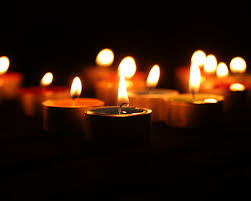
Which is why I’m talking to You, yes, You, up there. Bring him back. Whatever it is, do it. If you’re there, this is your chance. Do something. Now. I’m not gonna pray about it, I’m just sayin’ what needs to be done, so do it. Please. K.J. really needs to come back home now. Like, right now. Not in seven days or forty days or forty years or some weird stuff like that. I mean now, ok? Have him come back home now, really, now, coz Asha Carol’s not about to fly out of India soon and do something about it.

© 2014 threegoodwords

throwback thursday

coffee 3Livy.

She stopped. This was Bloomingdales. Nobody knew that name. No, she must have heard wrong. She continued but then, again.

Livy. Livy.

In a second she was twenty-two again, young and hopeful and proud of her job, how good she was. She’d managed to prove that she didn’t only have the looks, she also had the skills. She really was good at her job. She remembered when he first walked in, young, brash, angry at the boss, asking her sharply Is he in? She had asked him firmly but politely to wait. He had paced, hands in his pockets, flashing her quick, impatient looks. After the call she told him, He’ll see you now and he went in. There had been shouting. He stormed out and she didn’t really think of him again until a week later when she ran into him at the Xerox, and he asked her for a favor. A file he needed copying, he’d pick it up later, he was on the run. He was charming and sweet, so she did it. He came after his lunch break and small talked with her about music and movies and how he’d like to see the latest one, she forgot which one. The second time he did that she knew her hunch was right, he was looking for reasons to see her. It amused her. It was flattering. But they were all flirts so she never took it seriously. Until he asked her out. She should have said no. She was foolish and hopeful though, and said yes. And now someone was calling her Livy.

She stopped at the watches and acted as if she was looking. She felt someone stop next to her and ask if he could look at the something Phillip. The clerk was eager and polite. She dared a glance. No. Yes, but… No. Please. He was talking to the clerk and then said, She has slim wrists. Much like the lady here. Excuse me, I’m sorry to bother you, but could I ask you for a favor? She looked and looked and swallowed. He had aged well, very well. She asked, Pardon? And he said. My wife has about the same slim wrists as you do. Do you mind if I borrowed you as a mannequin? And she knew then, clearly, it was his old trick again, finding excuses to talk to her. She wanted to say no, but the clerk was surprised and expectant and she didn’t want to look mean-spirited or worse. So she stretched out her hand and the clerk fastened the watch around her wrist and he looked at it, nodding approvingly before saying Gold or silver? And the clerk asked, What does your wife usually wear? Both, he smiled and suddenly she was speaking. I think this one is very nice. It was beautiful, white gold and polished gold intertwined, with stones sparkling around the dial. It had to cost a fortune, but then he looked like money. He always had. The clerk smiled graciously and asked if he would take it. He said, I think I’ll look some more, and the clerk asked her politely if she could remove the watch. She watched her unfasten it and put it back on display. She moved to leave, saying a polite Goodbye. He turned, sharply, and there was something in his eyes and face that she hoped she was just imagining. He said, Thank you for your help, and she just nodded and walked down the aisle. She already passed the perfumes when she heard, Livy wait.

She stopped this time and turned. He was walking towards her, hands in his pockets, just like he used to. I’m sorry about that, he said once he stopped. Can I – can I ask you to a coffee? She just looked at him. Thirty-seven years and he wanted coffee. It’s only a coffee. Please. I know a place just round the corner. Unless you’re busy. He didn’t want to say the last part, she could see that. He still had his hands in his pockets. And she couldn’t deny that she was curious about his life.

The coffee extended to a dinner. He talked about himself and asked her questions. He had three children, she had two, all of them doing well in their own ways. They laughed more than she expected. He never looked anywhere else, his eyes fixed on her, that look becoming clearer and clearer. She knew she should stop this even before she agreed to the dinner. It wasn’t right. She knew that look on a man, she knew that feel of him. But she couldn’t deny how much she liked it, how nice it was, how simply nice it was to be looked at like that again. He began touching her over dinner, or rather, half way through, he took her hand and looked at her ring and brushed his thumb over it, looking serious, maybe sad. It was a sudden and very intimate gesture that broke down all the politeness they had been floating on till then. He said, I was such a coward. Then he let her hand go.

The tears just happened, she never saw them coming. She did what she could to stop them, smudging her napkin with her mascara, and finally the tears stopped. She looked at him and saw what she had dreaded, what had made her so furious back then, what had hurt her so much. She had known he loved her. She had known it, felt it, her whole body and senses, every single part of her knew it. And then he told her he’d met someone else and that he’d fallen in love with her and all those other horrible things that made her slap him and throw things and kick him out of her flat. The worst was how he took it, how he never defended himself, as if he knew he deserved it. She couldn’t face him after that. Just hearing his name was too much. And then she saw them, a year later, walking down some street, near here. She saw them together, saw how happy they were, and something broke and couldn’t be repaired again. She met Arthur soon after and started a new life, a good life, but that was always there, a shadow in her heart she could never get rid of.

And now, thirty-seven years later, he said I was such a coward. She got up and left the table, left the restaurant and hailed a cab. He caught up with her before she could get one, holding her back, making her yank herself free. He said Livy, please and she snapped, My name is Olivia. Olivia, he said, I’m sorry if I said something stupid – but she interrupted him with a Don’t apologize. You made your choice and I respect that. Just don’t come along now acting as if you cared. He looked hurt, but said nothing. I never forgot you, he said then, but she just scoffed, looking to the sky, trying to hold back the goddamn tears. Her Moma had warned her, the nice ones were the worst. I don’t know why you’re doing this, she finally said. You don’t look divorced so it can’t be that – Livy. Olivia. I understand if you hate me, but at least let me apologize. For what, she asked. Almost past her fives and she felt like twenty-two again. He pulled her closer to the restaurant, out of people’s way, and she had no way to fight it. I shouldn’t have cared, he said, I know that. I always thought it was the time, but I know that was an excuse. There was no excuse for what I did. I just wanted you to know that. That, and that I never forgot you, and that I’m sorry for what happened. I can’t make it un-happened. I want to, but I can’t. It’s not like I don’t love my family. I love them, all of them, my wife, my kids and yet – I regret every day that I just threw it all away. I – I never wanted to hurt you. Livy. Olivia. I never wanted to hurt you. I was just – I know you’ll probably never forgive me, but I – I couldn’t let you walk away like that, without letting you know –  I never meant it to be this way.

She just looked at him. Did he think this would change anything? He didn’t look like it, nor did he sound like it. He looked and sounded like someone who was saying I’m sorry and meant it. It took him almost four decades, but at least he got around to saying it. She nodded, Ok. He looked hopeful, but she stopped that when she said I should go home. Thank you for dinner. And without waiting, she walked to the next cab, got in without caring who hailed and drove home.

*

Three weeks later she received a huge bouquet of roses and a small gift-wrapped box with a bow. She opened the box and found the beautiful wristwatch in it, with a small card saying For a different time, Don. She had no idea what to think of it, except that he didn’t go by Donavan anymore. She looked at the watch. It was exquisitely light and very beautiful. She could never wear it. How explain it to Arthur, let alone the kids. She kept it hidden in her desk drawer and went back to the showroom, happy to entertain the next client. If she learnt one thing from what happened back then, then it was to stick to her ambition and start her own business. And now she had it, the kind of PR that was solid and ran really well, and it was all her own.

He kept sending flowers. Every Thursday, as if to commemorate their second meeting. Her assistant thought she had them ordered, she always put them in a tall glass vase on the round table she used for meetings. Once at her own desk, she couldn’t avoid seeing them. Every Thursday, a beautiful bouquet of flowers, very often roses, red, pink, cream, in all shades and always beautiful, filling her room with a perfect scent. Six months passed this way, every Thursday a bouquet of roses, and then she received an invitation to a fundraiser. It was too good to let pass, all she was thinking about when she accepted was the people she could meet there. New clients meant more business, and you could never have enough business. So she went with Arthur and saw him standing there with his wife, smiling, and she knew it, she just knew it. This was not going to end well.

© 2014 threegoodwords

milkshake


milkshakeThey talk about these things. They talk about ‘love on first sight’. Fireworks, violins in the sky, the whole nine yards. They write about it, sing songs about it, stage plays, make movies, but they never say it as it is. They never say it’s sitting in a diner, reading Yeats because you’ve got an exam coming, sitting in a diner drinking a milkshake because you like it, thank you very much, they don’t say you’re sitting in a diner reading Yeats, drinking vanilla and then the door opens and she walks in. They never say it as it is.

*

Bennie was in a good mood. No ‘good’ was not the right word. To explain Bennie’s mood, you had to explain Bennie, and explaining Bennie started with explaining her name. Bennie was in fact Albany, Albany Lord. Albany Lord, Albany from Albus, latin, white. It was ironic because Bennie was all but white. She was… now how do you call it. Nutwood. Praliné, but the caramel ones. She was dark on the white scale, but a smooth, even, ‘yummy’ colour as her Maman said, on every other. People asked if she was from the Caribbean, others talked to her in Portuguese expecting she was from Brazil. People expected a lot of things.

So here’s Albany, alba, white, and here’s Bennie Lord, black, noire, and whatever other words are out there to make Bennie cringe and blush. Yes, she can blush, thanks for asking, you just don’t see it a mile off like you do with Christine, but Christine could walk into a Poe and be Madeline, though that was a bit unfair. Bennie didn’t want Christine dead under a pile of rubble. Bennie liked Christine, because Christine understood Bennie in a curiously diachronic way. There, she finally used that word, yay!

cupcake 1So yeah, there was that. And there was Paris. There was always Paris. There was always that little lilt in Bennie’s English that yelled Vive la France! to the rest of Les Etats Unis. Bennie grew up in the Rue St. Béatrice, not far from the Patisserie Hermasse and the Boulangerie Martel. Madame Hermasse and Monsieur Martel were once married. The vows were said, wedding bells rang, the young couple moved in. Twenty years later, Madame Martel moved out and opened her own shop, selling simple homemade cakes and pastries, with her husband’s blessing of ‘You’ll never make it’. It was equal to the dépêche the Kaiser sent to Franz Joseph down south. Trenches were dug up soon after, and an endless war began. And above these post-marital hostilities, the Lords lived like rich refugees in Switzerland, watching the mayhem below. For ten years, those after the three in Munich and before the six in London, Rue St. Béatrice was Bennie’s home, world, universe. In Paris the Lords were Les Americains. In London, suddenly, they were ‘that French family in Nr. 20’.

So there was that. And then, for some reason, Bennie decided she would like to see what was on the other side of the Atlantic, if it really was the Land of the Free and the Home of the Brave. She signed up and was accepted and crossed the ocean. She landed on the soil so many other foreign feet had trod, landed in a jet plane and took up house on campus, and encountered her roommate Stacey. Stacey, or Stace’ first question was ‘Where are you from?’ and since it had become so common, her accent still slipped into alluring Gallic lisps and e’s, Bennie answered ‘Paris’ without thinking. ‘Texas?’ Stace answered and at first Bennie didn’t understand. Then she smiled and realized why her mother had – bitingly – said ‘Have fun explaining everything.’

‘No, the real Paris,’ Bennie explained.
‘With the tower?’
‘Yeah.’
‘Cool! So why’re you here?’
‘Pardon?’

And it was the French pardon, with the nasal aloofness of unexpected surprise.

‘I mean, come on, what did you leave France for?’
‘I’ve been in London these past years.’
‘So why not stay in London?’

How explain to this blue-eyed babe that she wanted to see what was beyond the horizon?

‘I’m on an exchange programme.’
‘Oh, ok. Cool. I’d like to do an exchange some day, y’know, maybe tour Europe, see the Oktober –thing, you know, just hang out. Were you there?’
‘Where?’
‘The Oktoberfest.’
‘A few years ago. We were visiting a friend.’
‘Really? Sweet! How was it?’

Loud, drunk, cheeky Italians everywhere. Traditional food in the house that was famous, cafés lining up streets like some corner in Paris, kissing Sebastian in that bar and smiling when he said he could show her the city the next day. The ancient churches, that castle that had something to do with nymphs and that restaurant with the perfect linguine. Sebastian’s flat near the river, the wide bed, the soft pillows, the coffee in the morning. Flying home with the others teasing her to the bone, knowing she had his number, certain she’d never call.

‘Nice,’ Bennie said.
‘I really want to go one day. I say, are you going to that writing thing later on? They say it’s a requisite.’

And that was the beginning of her life with Stace. Stace was sweet, Stace was fun, Stace sometimes said incredible things. Bennie liked Stace. She tried not to laugh at her in her head. Stace was adorable. Stace was Stace. And so there was that as well.

So, when Bennie walked into Louis’ diner that evening, dressed in a red-and-white outfit, fifties’ style, she was in a good mood. It was a mood that had everything in it, Albany, Paris and Stace, and yes, J.J. who kissed her lips before he opened the door, J.J. in a 50s football outfit, jacket, jeans and all, J.J. who held her hand, J.J. tall, dark and handsome, J.J. the other’s called Zen, J.J…. there was a lot to J.J. Bennie couldn’t explain. But there was J.J. that evening and Stace and the others, and they all walked into the diner together in their fifties’ outfit because Colwell’s party was always a theme party and this time it was the Fifties and they were all in petticoats and high collars, bobbie-socks and pig-tails. So they walked into Louis’ and Bennie was in a good mood, a calm mood, a mood that had everything in it, she walked in and scanned the tables and saw him and thought, ‘He’d fit right in’. She saw him and felt, he was the kind of picture you wanted to have on your screen, so when your computer fell asleep you could look and look and look again, enjoying the scenery. She saw him and thought and felt and looked back at J.J. and the others and wondered that she’d never seen him before, but you never knew with these things.

quote 1

*

She was with a whole crowd, all of them cool and laid back, all of them fit to slip into a music video and fill out the screen. They never explained how they did it, how they kept it, how they made it, how they simply stayed cool, no matter what they did. They laughed and smiled and teased, and some of them were as pale as milk. They were part of it, but still, without the core, dark and glistening, the pale flesh surrounding them would be nothing. They never explained how it was done, it just happened right in front of you and you couldn’t get up to join because that would be stupid and you’d never fit in. So you just sat and watched and saw that smile, you sat and watched and waited for her to look your way, but she never did, she was all eyes for that hunk at her side. You waited and watched, inconspicuously – now was that i-c-o or i-c-u? – you waited and watched, but nothing happened, she just kept that perfect smile and you lost all the taste for your milkshake, you wished for whisky instead, bourbon and big game hats, something that could let you lean against an oak-wood counter and look like another breed of cool. You thought of the Club back home and any thought of wood panelled smoking rooms was destroyed by the golf buggy hopping down the hills. No, you could never join them, you could never do it, you were the species of the perpetually drab and un-cool.

threegoodwords©2014

coffee at seven

rain 3food 6

 Drip-drop, drip-drop, drip-drop – and I’m already tired. Can you imagine getting tired by simply watching a coffee machine do its work? I can. And not only can. I do. I’m currently leaning my head on the counter, watching the brown-black fluid dribble its way into the pot, from north to south, up to down, drip to drop, drip-drop, drip-drop, drip- 

‘Yes dear.’

That’s Max. He thought I had said something, and so came into the kitchen, checking his cufflinks with an ever-ready, ‘Yes, dear’ on his lips.

There are times when I fear that I won’t have any thoughts anymore. But just when I think they’re gone for good – whoops, there they are again.

We have a dog. A bit of a Husky. Silver grey. I call him Wolf. He loves me, I love him, together we would make the perfect pair, me being so loud and all. At least Maxwell thinks so. Sometimes. If you’ve seen The Nanny, you’ll have a vague idea of how he looks like. He smiles less, and gets embarrassed more. Plus, I don’t have that voice – then again, I’m not half as sexy as Fran.

I’m me. Short, plump, dark-blond, brown-eyed, 38-year-old me.

Plump meaning, I’m nowhere near the Nicole Kidman league. She used to be very pretty, I don’t know what happened. I was never tall, never had that slim frame. When I was twenty I had curves, curves that filled out bras and bikinis, curves that got Maxwell T. Richardson – T. for Tennyson… his parents were, are and always will be, odd – into a rather interesting mood.pretty nook

Max has always been shy.

He was the tall, dark-haired, slightly lanky sort of man, who stood with his back to the wall at dances, nursing a cup of some unidentifiable drink with one foot flat against the wall, looking like the human twin of a black feathered flamingo.

He had a nice smile, Max. Still has, those even teeth under a straight nose, grey eyes – grey, not blue, no matter what his mother says – and dark hair. Not black though. Bit of a shame, but then again, look who’s talking.

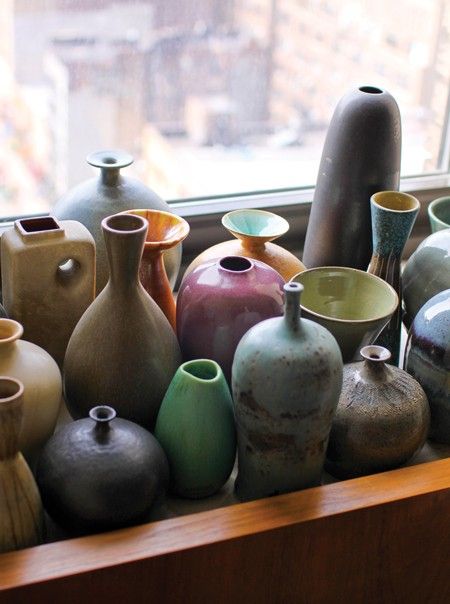
As I said, I had curves, once. Yes, ‘had’. Now I have bends. Maybe it’s because I haven’t worn a skirt in a decade. But, how can you wear a skirt, when day-in, day-out, you are elbow deep in dirt and clay – making pots, filling pots, arranging pots, selling pots, buying pots – pots, pots, pots… It goes so far that my nieces and nephews call me Mrs. Pots.

Did I mention that we don’t have children?

We did, once. For ten days. Then she died. Isabelle.

I think, until today, Maxwell hasn’t forgiven the gods for that.

That was fifteen years ago… She would be a teenager now, harassing us with basketball and boyfriends. Maxwell played basketball for some reason, centuries ago, and I was certain she would have gotten my figure-eight frame.

Drip-drop. Drip-drop. Drip-drop. Drip-

‘I say, Rosemary-.’

I hate that name. I hate it. I hate it. I hate it. And did I mention that I hate it? Why couldn’t Mother have named me June, or Diane, or Christine? No, it had to be Rosemary.

When Maxwell is irritated, he calls me Rose, which is, I know, rather ironic, but then, that flower does have thorns. Otherwise he calls me Rosemary, as if I were a herb in a glass, a picture on a wall, a cup of tea to toss in just before he goes off to work.

We live in London, fifteen minutes to the City.

Maxwell’s a banker. I’m his crazy artist wife.ceramics 2

I think he’s having an affair.

‘Yes, love?’ I answer, still with my right cheek on the kitchen counter, watching the coffee drip into its glass pot.

Drip-drop. Pit-pot. Tip-top. I-am. Mrs. Pots.

Miss Pots would fit better.

What would it be to be a Miss again?

But now, at 38?

With the faded memory of Isabelle, my love, my life, my baby?

When she was buried in her little chestnut coffin, I felt the priest had laid my love to rest as well.

We have separate beds, Maxwell and I. They are fitted together, slap up next to each other, but it is there, the great divide, and no one crosses it, not even an inch, not even once, not ever, no.

Drip-drop. Pit-pot. Tip-top. I am. Miss Pots. Miss Pots. Missed spots.

There’s a smudge on the coffee machine. It looks like crumbled icing. Or simply sugar? Who knows?

‘Are you tired, Rosemary?’

I hate it. I hate it. I hate it. I hate it. Why can’t he call me something like Chantal? Why didn’t he pick out some lovely nickname, some pet cat-call, something, anything, everything but Rosemary?

‘A tad bit.’

‘You want something from the grill?’

Maxwell never says take-away. For an unexpected moment, I catch my breath.

Ravi Naveen. That’s the boy who always comes around to drop off the curry. Maxwell calls, Ravi takes it away from the Taj, and carries it on the long exodus down two stops on bus 9, two blocks and one corner, to our house, where I wait. Then the bell rings and I, or rather my hand, shakes slightly when I open the door. And then, when it swings back to me, there he stands, the two plastic bags in his hand – Maxwell likes to eat well; bother him with his metabolism – and then he says:

‘Evening Mrs. Richardson. All’s well?’

He never says, How are you? Or Phew! What a day! but always, All’s well? – with variations. And every time, honestly, every single time, I want to grab his hand, drag him to the kitchen, sit him down with a cup of tea, and tell him everything.

But as always, I just say, Thank you, yes, fine, hand him the money with somewhat of a smile, see him tap his red cap, turn, and jog down our front steps with those long, long legs.

‘Yes, why not.’

I hear Maxwell dial the phone, order the usual, laugh a little, exchange a word or two about the day, and then hang up with something of a sigh.

‘Sit down Rosemary, you’ll end up hurting your back’, he says before walking out of the kitchen, and for some reason, some unbearable urge forces me to stick out my tongue at him after he closes the door. Then I see my reflection the blackness of the coffee pot – drip-drop, drip-drop – and it makes me want to laugh and cry all at once.

Just then, for no reason at all, I realize that it’s raining.

 
ceramics 4

Pling-pling. Pling. Pling-pling. Pling-pling-pling.

06:34.

In about five minutes, the doorbell will ring.

Will he carry an umbrella?

Or will he, like those young actors on TV – I know, it is my greatest shame, but I love them, those soap operas full of teenage agony and strife – will he be drenched to his very shirt, so that when he walks you can see every muscle? Will his hair – black, black, black! – be splattered all over his head like a glistening multi-armed octopus?

Will it in fact, be him?

Or his brother, Rajan, a boy, fifteen, sixteen perhaps.

It is hard for me to see him.

When he comes by, I remember that it should be Isabelle standing in my place, waiting with shaking fingers, wishing, hoping, praying, that he had been crazy enough to forget his umbrella.

Pling-pling. Pling-pling-pling. Pling.

I’m sitting on the window-seat, facing the street, holding a cup of coffee with a magazine on my lap, watching the rain drop like soft crystal onto the pane.

Pane. Pain.

Would rain now anything of pain? What does it feel like to be smashed against a window?

‘Do you mind getting the door, Rosemary?’ I hear from down the hall.

Maxwell lives in his office. Something of a library in fact. We went shopping for it together. He said that though it was his office, it was our house, and he didn’t want me screaming or fainting every time I entered that particular room.

It is all greens and browns.

There was a count somewhere in Maxwell’s family. He knows what it means to spend the summer in the country.

‘Yes, love.’

I hadn’t heard the ring. Funny, but the rain was suddenly as loud as church bells.

I get up, slowly.

And I walk, slowly, from the living room – it is large, with many a couch and a seatee, a fireplace (Wolf is lying in front of the crackling fire, curled up into a sleeping ball of fur), and a chaise-longue.

But I, I love the window seat. Simple, neat, full of light, day in, day out, even at night, as the street-lamp shines into it in odd orange rays, half sterile, half alive, never really gone, and never actually there.

I walk into the hall, over the checkerboard tiles, to the black front door with the golden handle.

I push down. Pull open. And wait.

‘Evening, Mrs. Richardson. All’s well, I hope. Sorry, but I forgot my umbrella.’

I put down my cup onto the small table under the hallway mirror.

It isn’t a warm evening, yet he is dressed in a light blue shirt and dark-blue jeans, his hair a colony of curls, so black, so wonderfully ebony, glossy black, I feel it’s the universe shining back at me. He has both plastic bags in one hand, while his other, young and strong, wipes the water out of his face.

It is then, when all I can see are two pairs of eyes over his fingers, fingers that look as if they knew things Maxwell wouldn’t even dream about, that I make a decision.

‘Please come in. We’ll get you dried up first.’

He looks at me surprised. And then, startlingly, he flashes a smile, so white, I feel as if struck, really, by a flash of something like lightning.

‘Rosemary?’

The heat rises into my cheeks in less than a second.

The last time I blushed like this, I believe I was staring down into Maxwell’s eyes, wondering why on earth he’d destroyed it all by asking me to marry him. We had been perfectly happy as friends. But no, he had to come with love, had to infect me with the disease, and now look what it got us into.

Ravi looks… expectant, waiting, like a young tiger on the prowl. On a second thought, that’s probably not all that right, but he really does, truly, look like that right now.

‘Yes, love.’

It is like an automatic. I hear ‘Rosemary’, and my whole vocal system collaborates to produce the air waves that compound to ‘Yes, love,’ without me even having to think a thought about it.

‘Oh – hello. I thought you hadn’t heard.’

I turn and see Maxwell in the hallway, surprised to see Ravi at the door. I feel as if Mother caught me nibbling at the Christmas Cake.

‘Good God, you’re wet through! Honestly, Rose, why don’t you ask him in?’

‘I was just about to.’

I cannot get myself to turn back to those eyes, those all-seeing eyes, and I am grateful that Maxwell walks up to the door, takes the plastic bags out of Ravi’s hands and escorts him into the kitchen. He even sits him down, pours him a cup of coffee and asks me, me, me! to fetch a towel. I do.

In the bathroom, the craziest thing crosses my mind, and I find myself spraying the towel with my perfume, softly, not too much.

When I return, I hand it to Ravi without looking at him, turn to the window where through the pane – pling-ping-splat-ping – I see him wipe his face with his eyes closed. For a moment I believe he holds it longer than necessary to his face before rubbing his hair dry – with the other side – after accepting a cup of coffee from Maxwell with a nod and a smile.

Maxwell talks to him about his day and I drink everything in, wishing to find a hint in his words, something to tell me that in between his hours at the Taj and those at the University (Engineering, he says. There’s something about building that fascinates him), his parties, his laughter, his one-night-stands – oh, he has to have them; I insist that he has to have them; he has to be at least that free, for I can see him in those fleeting moments, those nebulous hours between night and dawn where everything feels forbidden – he remembered, maybe only for a moment, maybe for the brief breadth of a flashing, passing smile, he remembered me.ceramics 3

Then, rather suddenly, the telephone rings, and Maxwell rushes out of the room, apologising.

The silence is slicing, and I cannot, for all the world, turn around, but keep looking out of the window, past the plants on the window sill, through the pane out into the small stretch of garden between the house and the fence of the one opposite. It is empty, up for sale, and so far, I think, a young couple is rather interested in buying it.

But then there is movement, the scraping of wood on stone-tiles, and something bursts in my middle, like a grape pinched between two fingers.

‘Thank you Mrs. Richardson’, he says, handing me the towel in due distance, that is three steps away from me.

There is something of a bow in how he does it, but then our fingers touch, I feel the brush of his hand, his eyes meet mine and I look to the floor like back then when I was seventeen.

‘Rosemary, do we have time on Thursday?’

I look up, a little too sharply, past Ravi to Maxwell who’s at the door, looking at a notepad, half in the doorway half in the hall. Quickly, I move away from the window.

‘No. Not that I know of.’

Maxwell nods, and leaves for his office while I open the door a bit wider. Next moment, I feel a shoulder brush my own and watch Ravi walk past me into the hall. He’s just about to reach the door when I hear myself say ‘Wait – ! Take this with you.’ I hand him my umbrella, black with my initials in silver, R.R., small and only visible to the one underneath.

He takes it with a smile, but neither our hands, nor our fingers touch.

He opens the door, and slips through. He opens the umbrella on the first front step, while I stand in the door, watching when suddenly, with the umbrella wide open, he turns, slides a hand around my neck, and kisses me, hidden under the black.

It is not very long, but warm, oh, so warm, so full of life and promise, and that extra splash of red that has long been missing in my life that I feel the bright, bursting sun fall through the towers of rainy clouds in the sky.

Next moment, he’s gone.

© 2014 threegoodwords

Toni’s

rain-249872‘People are like raindrops.’
‘Really.’
‘Yeah. If they fall too hard, they desintegrate.’
‘Simon.’
‘What? It’s true isn’t it? Imagine someone falling from -‘
‘Simon.’
‘Yeah?’

Amanda looked at Simon and decided she didn’t like him. She loved him, but she didn’t like him. He went against her grain. But she loved him. And that was just about it.

They lived in something other people called ‘flat’. It was on the first floor. It had three rooms, if you didn’t count the kitchen: living room, bedroom, bathroom. There were times Amanda found Simon sleeping in the tub. He said it was good for his back. Amanda just shook her head and asked if he wanted some coffee. He would yawn then, stretch, and ask for tea instead.

When asked about their relationship, Amanda’s general answer was, ‘I really don’t know.’ Simon on the other hand leaned back, sighed satisfied and said: ‘Amanda and I, we’re two of a kind.’ Amanda looked at him then, wondering if they really lived on the same planet.

The apartment had small windows with deep sills. Neither had much for a view, except the one in the living room. It faced the street and a small patch of green with a gnarled old appletree. Amanda called it the Sad Old Man. Simon called it ‘visceral’.

Simon used words like that. When he said ‘pneumonia’ there was just the faintest hint of a p. He didn’t grow his hair long. He was afraid Amanda would one day creep up behind him and cut it off. He smiled when a woman cried in the movies. If asked why, he said: ‘Now she’s beautiful. It’s easy if all you have to do is smile.’ Amanda sighed then as if saying: ‘You see, that’s why I don’t like him.’ But she loved him. And that was just about it.

*

Amanda, who was still sitting at the kitchen table, facing Simon, Amanda choked her cigarette in a pile of ash-tray stubs, let out a puff of smoke, and decided that the whole raindrop business was entirely besides the point.

‘Are you hungry?’

Simon shrugged. Oh no. Amanda knew what was about to happen. But as usual, she held a horrible fascination for the needlessness of the following… discussion.

‘Are you?’ she asked.
‘Hungry? A little.’
‘Pasta?’
‘Again?’
‘What do you want then?’
‘Dunno.’
‘I don’t think we have the recipe for that.’
‘How about eating out?’

Amanda looked up surprised. After living with Simon for so long, simple things surprised her a lot more than they used to. Only two days ago she realized that the sky really was true blue.

‘Today?’ Amanda asked.
‘Yeah.’
‘It’s Monday.’
‘So?’
‘You hate going out on Mondays.’
‘I do not. You wanna go?’
‘Where to?’
‘Toni’s?’
‘But Toni’s is pasta.’
‘No. Toni’s is Toni’s.’

Of course. Simon only ever ate pasta at Tonis, but Toni’s wasn’t pasta, it was Toni’s. Ok.

‘You know what?’ she asked then.
‘What?’
‘How about some Chinese?’
‘I thought you wanted pasta.’
‘It was only a suggestion.’
‘So, no pasta.’
‘Not if you don’t want to.’
‘I don’t mind.’
‘But I thought you said you didn’t want to?’

Simon gave her an incredulous look, as if she had said, ‘I want to become a dentist’. When Simon answered, he spoke carefully.

‘I said: Again?’
‘Yeah, meaning you don’t want pasta again, so you want something else.’
‘I never said that.’
‘Then what did you say?’
‘I already told you: Again?’
‘Are you hungry at all, Simon?’
‘As I said: A little.’
‘So, what do you want?’
‘Pasta sounds fine.’

Amanda counted to five, then to ten. She remembered to breathe out again.

‘Why didn’t you say so?’ she asked.
‘But you know I like pasta.’
‘You like pasta.’
‘Always have. You know that.’

Ok. Enough. Amanda reached for the phone on the table. Simon asked who she was calling.

‘The Take Away.’
‘But I thought you wanted to go out.’
‘You wanted to go out. I just said ok.’
‘No, you said it’s Monday.’
‘Simon.’
‘What?’
‘Quit it.’
‘Quit what?’
‘I’m calling the Take Away.’
‘So no pasta.’
‘No. No pasta.’
‘All right.’

Amanda stopped dialling.

‘What’s that supposed to mean?’
‘Nothing.’
‘Nothing?’
‘Go ahead, call up the Take Away.’
‘You really want to go to Toni’s?’
‘We can if you want to.’
‘Just give me a straight answer, Simon. Toni’s, yes or no.’
‘But I thought you didn’t want pasta.’
‘Simon!’
‘Ok, ok. Toni’s? No.’
‘No?’
‘No.’
‘Why?’
‘It’s raining outside.’

Amanda got up and walked out of the kitchen. She didn’t call the Take Away. She put down the phone instead, put on her raincoat and trainers and walked the five minutes to Toni’s, sat down and ordered a pepperoni Pizza with extra cheese. She’d already drank half her coke before her phone rang. She didn’t answer it.

She got a text message: Whr r u?
She answered: Toni’s.

Fifteen Minutes later, Simon entered Toni’s with a wet umbrella and a plastic bag full of four boxes from the Chinese Take Away. He sat down opposite Amanda and greeted the waiter. The waiter smiled and brought him the usual, a tall glass of coke, a slice of lemon, no ice. The pizza came, Simon asked for an extra plate. They shared the pepperoni pizza with extra cheese, Chop Suey, Wan Tan and Chicken, Sweet&Sour. Nobody complained. It was, after all, Monday.


© 2014 threegoodwords

Anna Fonte's Paper Planes

Words, images & collages tossed from a window.

Classic Jenisms

Essays, notes & interviews on why literary fiction matters to human living

von reuth

small press. great publishing.

a thousand and one books

but don't take my word for it

Kristiane Writes

Home hub & scribble space of Prose Writer & Poet Kristiane Weeks-Rogers (she/hers), author of poetry collection: 'Self-Anointment with Lemons'.

The 100 Greatest Books Challenge

A journey from one end of the bookshelf to the other